History Archives | Page 63 of 140 | National Humanities Center

History

Madness in the City of Magnificent Intentions

Madness in the City of Magnificent Intentions: A History of Race and Mental Illness in the Nation’s Capital

By Martin Summers (NHC Fellow, 2013–14) From the mid-nineteenth to the late twentieth centuries, Saint Elizabeths Hospital was one of the United States' most important institutions for the care and treatment of the mentally ill. Founded in 1855 to treat insane soldiers and sailors as well as civilian residents in the nation's capital, the institution … Continued
%customfield(subject)%

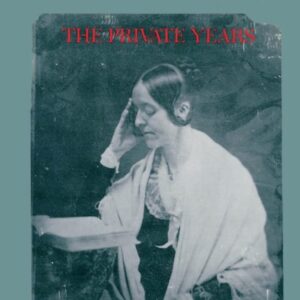
Margaret Fuller: An American Romantic Life. Vol. 1, The Private Years

By Charles Capper (NHC Fellow, 1994–95; 2002–03) With this first volume of a two-part biography of the Transcendentalist critic and feminist leader, Margaret Fuller, Capper has launched the premier modern biography of early America's best-known intellectual woman. Based on a thorough examination of all the firsthand sources, many of them never before used, this volume … Continued

%customfield(subject)%

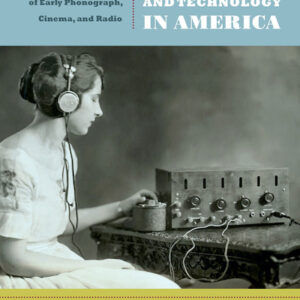
Music, Sound, and Technology in America: A Documentary History of Early Phonograph, Cinema, and Radio

Edited by Timothy D. Taylor (NHC Fellow, 1999–00), Mark Katz, and Tony Grajeda This unique anthology assembles primary documents chronicling the development of the phonograph, film sound, and the radio. These three sound technologies shaped Americans' relation to music from the late nineteenth century until the end of the Second World War, by which time … Continued

%customfield(subject)%

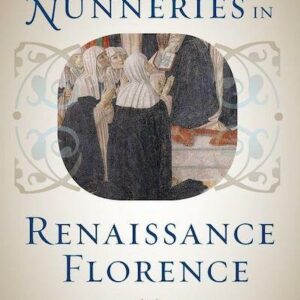
Nuns and Nunneries in Renaissance Florence

By Sharon T. Strocchia (NHC Fellow, 1998–99; 2015–16) The 15th century was a time of dramatic and decisive change for nuns and nunneries in Florence. In the course of that century, the city’s convents evolved from small, semiautonomous communities to large civic institutions. By 1552, roughly one in eight Florentine women lived in a religious … Continued

%customfield(subject)%

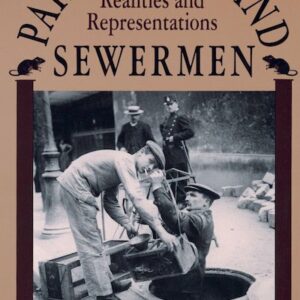
Paris Sewers and Sewermen: Realities and Representations

By Donald Reid (NHC Fellow, 1987–88; 2012–13) The expansion of the Paris sewer system during the Second Empire and Third Republic was both a technological and political triumph. The sewers themselves were an important cultural phenomenon, and the men who worked in them a source of fascination. Donald Reid shows that observing how such laborers as cesspool … Continued

%customfield(subject)%

Plutarch and the Historical Tradition

Edited by Philip A. Stadter (NHC Fellow, 1989–90) These essays, by experts in the field from five countries, examine Plutarch's interpretative and artistic reshaping of his historical sources in representative lives. Diverse essays treat literary elements such as the parallelism which renders a pair of lives a unit or the themes which unify the lives. … Continued

%customfield(subject)%

Related Lives: Confessors and Their Female Penitents, 1450-1750

By Jodi Bilinkoff (NHC Fellow, 1999–00) In early modern Catholic Europe and its colonies priests frequently developed close relationships with pious women, serving as their spiritual directors during their lives, and their biographers after their deaths. In this richly illustrated book, Jodi Bilinkoff explores the ways in which clerics related to those female penitents whom … Continued

%customfield(subject)%

Ritual in Early Modern Europe

By Edward Muir (NHC Fellow, 1992–93) The comprehensive 2005 study of rituals in early modern Europe argues that between about 1400 and 1700 a revolution in ritual theory took place that utterly transformed concepts about time, the body, and the presence of spiritual forces in the world. Edward Muir draws on extensive historical research to … Continued