History Archives | Page 84 of 140 | National Humanities Center

History

%customfield(subject)%

A Troubled Feast: American Society since 1945

By William E. Leuchtenburg (Trustee; NHC Fellow, 1978–79; 1979–80; 1980–81) The essence of this book is suggested by its title. The "troubled" aspects may well be the more familiar—the frightful assassinations of public men, the malignant effects of two Asian wars, the endemic violence, the persistence of social ills. Acknowledgment of the reality of the … Continued

%customfield(subject)%

After the Constitution: Party Conflict in the New Republic

Edited by Lance Banning (NHC Fellow, 1986–87) This book introduces students to the wealth of modern writings on the early party struggle. It endows them with a basic understanding of the way various interpretations have developed and enables them to synthesize the facts and make informed judgments among competing views.

%customfield(subject)%

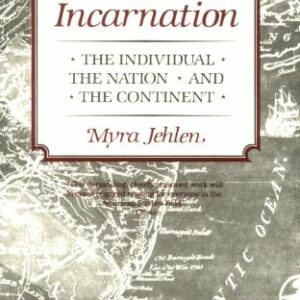
American Incarnation: The Individual, the Nation, and the Continent

By Myra Jehlen (NHC Fellow, 1985–86) In exploring the origins and character of the American liberal tradition, Myra Jehlen begins with the proposition that the decisive factor that shaped the European settlers’ idea of “America” or the “American” was material rather than conceptual—it was the physical fact of the land. European settlers came to a continent on … Continued

%customfield(subject)%

Art and Resistance in Germany

Edited by Elizabeth Otto (NHC Fellow, 2017–18) and Deborah Ascher Barnstone In light of the recent rise of right-wing populism in numerous political contexts and in the face of resurgent nationalism, racism, misogyny, homophobia, and demagoguery, this book investigates how historical and contemporary cultural producers have sought to resist, confront, confound, mock, or call out … Continued

%customfield(subject)%

Becoming Christian: The Conversion of Roman Cappadocia

By Raymond Van Dam (NHC Fellow, 1986–87) In a richly textured investigation of the transformation of Cappadocia during the fourth century, Becoming Christian: The Conversion of Roman Cappadocia examines the local impact of Christianity on traditional Greek and Roman society. The Cappadocians Basil of Caesarea, Gregory of Nyssa, Gregory of Nazianzus, and Eunomius of Cyzicus were influential … Continued

%customfield(subject)%

Biomedical Platforms: Realigning the Normal and the Pathological in Late-Twentieth-Century Medicine

By Peter Keating (NHC Fellow, 2000–01) Since the end of World War II, biology and medicine have merged in remarkably productive ways. In this book Peter Keating and Alberto Cambrosio analyze the transformation of medicine into biomedicine and its consequences, ranging from the recasting of hospital architecture to the redefinition of the human body, disease, … Continued

%customfield(subject)%

Caste and Outcast

By Dhan Gopal MukerjiEdited by Akhil Gupta (NHC Fellow, 2000–01), Gordon H. Chang, and Purnima Mankekar A person of rare talent and broad appeal, Dhan Gopal Mukerji (1890-1936) holds the distinction of being the first South Asian immigrant to have a successful career in the United States as a man of letters. As the author … Continued

%customfield(subject)%

Citizenship in the Western Tradition: Plato to Rousseau

By Peter Riesenberg (NHC Fellow, 1978–79) Intended for both general readers and students, Peter Riesenberg's instructive book surveys Western ideas of citizenship from Greek antiquity to the French Revolution. It is striking to observe the persistence of important civic ideals and institutions over a period of 2,500 years and to learn how those ideals and … Continued

%customfield(subject)%

Confronting Fascism in Egypt: Dictatorship Versus Democracy in the 1930s

By Israel Gershoni (NHC Fellow, 2004–05) Confronting Fascism in Egypt offers a new reading of the political and intellectual culture of Egypt during the interwar era. Though scholarship has commonly emphasized Arab political and military support of Axis powers, this work reveals that the shapers of Egyptian public opinion were largely unreceptive to fascism, openly rejecting … Continued