The Origin and Development of Arabic Scientific Thought = الفكر العلمي العربي : نشأته و تطوره
By George Saliba (NHC Fellow, 1997–98)
By George Saliba (NHC Fellow, 1997–98)
By Shaul Bakhash (NHC Fellow, 1983–84) Five years after the overthrow of the Pahlavi monarchy, Iran remains convulsed by political upheaval and embroiled in international conflict. Shock waves from the Iranian events have stirred unrest in the Middle East from Lebanon to Saudi Arabia, fed Islamic revivalism elsewhere in the Islamic world, and undermined the … Continued

By Robert L. Kendrick (NHC Fellow, 1998–99) In this book, a follow-up to his 1996 monograph Celestial Sirens, Robert Kendrick examines the cultural contexts of music in early-modern Milan. This book describes the churches and palaces that served as performance spaces in Milan, analyzes the power structures in the city, discusses the devotional rites of the … Continued
By Kate Flint (NHC Fellow, 2007–08; 2015–16) This book takes a fascinating look at the iconic figure of the Native American in the British cultural imagination from the Revolutionary War to the early twentieth century, and examining how Native Americans regarded the British, as well as how they challenged their own cultural image in Britain … Continued
By Thomas W. Laqueur (Trustee; NHC Fellow, 2000–01) The Greek philosopher Diogenes said that when he died his body should be tossed over the city walls for beasts to scavenge. Why should he or anyone else care what became of his corpse? In The Work of the Dead, acclaimed cultural historian Thomas Laqueur examines why humanity … Continued
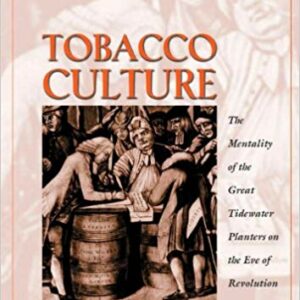
By T. H. Breen (NHC Fellow, 1983–84; 1995–96) The great Tidewater planters of mid-eighteenth-century Virginia were fathers of the American Revolution. Perhaps first and foremost, they were also anxious tobacco farmers, harried by a demanding planting cycle, trans-Atlantic shipping risks, and their uneasy relations with English agents. George Washington, Thomas Jefferson, and their contemporaries lived … Continued
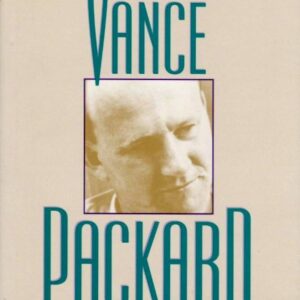
By Daniel Horowitz (NHC Fellow, 1984–85) Vance Packard’s bestselling books–Hidden Persuaders (1957), Status Seekers (1959), and Waste Makers (1960)–taught the generation that came of age in the late 1950s and early 1960s about the dangers posed by advertising, social climbing, and planned obsolescence. Like Betty Friedan and William H. Whyte, Jr., Packard (1914- ) was … Continued
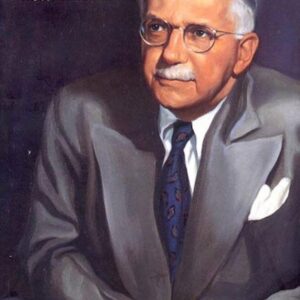
By Kenneth Robert Janken (NHC Fellow, 2000–01) From his earliest years, Walter White was determined to transcend the rigid boundaries of segregation-era America. An African American of exceptionally light complexion, White went undercover as a young man to expose the depredations of Southern lynch mobs. As executive secretary of the NAACP from 1931 until his … Continued
By Monica H. Green (NHC Fellow, 1996–97) In this collection of seven major essays (one of them published here for the first time), Monica Green argues that a history of women's healthcare in medieval western Europe has not yet been written because it cannot yet be written – the vast majority of texts relating to … Continued

Edited by A. James Arnold (NHC Fellow, 1989–90), Julio Rodríguez-Luis, and Michael Dash This history for the first time charts the literature of the entire Caribbean, the islands as well as continental littoral, as one cultural region. It breaks new ground in establishing a common grid for reading literatures that have been kept separate by … Continued