History Archives | Page 67 of 140 | National Humanities Center

History

%customfield(subject)%

Capital Affairs: London and the Making of the Permissive Society

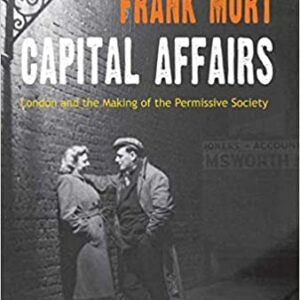
By Frank Mort (NHC Fellow, 2001–02) A series of spectacular scandals profoundly disturbed London life during the 1950s in ways that had major national consequences. High and low society collided in a city of social and sexual extremes. Patrician men-about-town, young independent women, go-ahead entrepreneurs, Westminster politicians, queer men, and West Indian newcomers played a … Continued
%customfield(subject)%

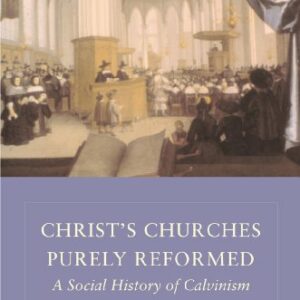
Christ’s Churches Purely Reformed: A Social History of Calvinism

By Philip Benedict (NHC Fellow, 1993–94) This sweeping book tells the story of Calvinism’s origins, expansion, and impact across Europe from the upheavals of the early Reformation to the end of the seventeenth century. The faith’s fundamental doctrines, diverse ecclesiastical institutions, and significant consequences for lived experience are all explored, revealing the ongoing interplay between … Continued

%customfield(subject)%

Comparison and History: Europe in Cross-National Perspective

Edited by Deborah Cohen (NHC Fellow, 2001–02) and Maura O’Connor In essays that engage practical, methodological, and theoretical questions, the contributors to this volume assess the gains as well as the obstacles and perils of historical research that traverses national boundaries.

%customfield(subject)%

Creating Medieval Cairo: Empire, Religion, and Architectural Preservation in Nineteenth-Century Egypt

By Paula Sanders (NHC Fellow, 2002–03) This book argues that the historic city we know as Medieval Cairo was created in the nineteenth century by both Egyptians and Europeans against a background of four overlapping political and cultural contexts: the local Egyptian, Anglo-Egyptian, Anglo-Indian, and Ottoman imperial milieux. Addressing the interrelated topics of empire, local … Continued

%customfield(subject)%

Davy Crockett: The Man, the Legend, the Legacy, 1786-1986

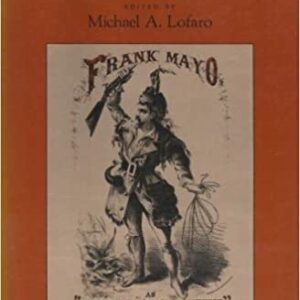
Edited by Michael A. Lofaro (NHC Fellow, 1980–81) Blending myth and reality, Constance Rourke aimed to get at the heart of Davy Crockett, whose hold on the American imagination was firm even before he died at the Alamo. Davy Crockett, published in 1934, pioneered in showing the backwoodsman’s transformation into a folk hero. It remains a … Continued

%customfield(subject)%

Drowning in Laws: Labor Law and Brazilian Political Culture

By John D. French (NHC Fellow, 1995–96) Since 1943, the lives of Brazilian working people and their employers have been governed by the Consolidation of Labor Laws (CLT). Seen as the end of an exclusively repressive approach, the CLT was long hailed as one of the world's most advanced bodies of social legislation. In Drowning in … Continued

%customfield(subject)%

Europe, 1780-1830. 2nd ed.

By Franklin L. Ford (NHC Fellow, 1983–84) Europe 1780–1830 rapidly established itself as a standard introduction to European history in the age of the French Revolution and its aftermath when it first appeared. Now for the first time the book has been fully revised, updated and expanded. The half-century covered constitutes one of the most … Continued

%customfield(subject)%

Fezzes in the River: Identity Politics and European Diplomacy in the Middle East on the Eve of World War II

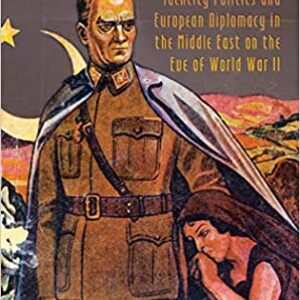
By Sarah D. Shields (NHC Fellow, 2006–07) Self-determination, imported into the Middle East on the heels of World War I, held out the promise of democratic governance to the former territories of the Ottoman Empire. The new states that European Great Powers carved out of the multilingual, multiethnic, and multireligious empire were expected to adhere … Continued

Forgotten Healers

Forgotten Healers: Women and the Pursuit of Health in Late Renaissance Italy

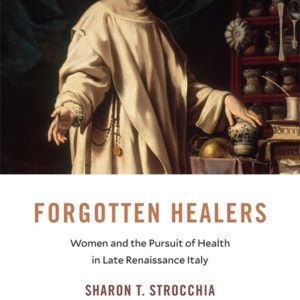
By Sharon T. Strocchia (NHC Fellow, 1998–99; 2015–16) In Renaissance Italy women played a more central role in providing health care than historians have thus far acknowledged. Women from all walks of life—from household caregivers and nurses to nuns working as apothecaries—drove the Italian medical economy. In convent pharmacies, pox hospitals, girls’ shelters, and homes, … Continued