History Archives | Page 82 of 140 | National Humanities Center

History

%customfield(subject)%

Tacky’s Revolt: The Story of an Atlantic Slave War

By Vincent Brown (NHC Fellow, 2011–12) In the second half of the eighteenth century, as European imperial conflicts extended the domain of capitalist agriculture, warring African factions fed their captives to the transatlantic slave trade while masters struggled continuously to keep their restive slaves under the yoke. In this contentious atmosphere, a movement of enslaved … Continued
%customfield(subject)%

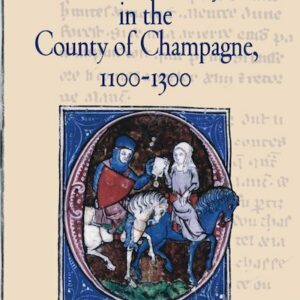
The Aristocracy in the County of Champagne, 1100-1300

By Theodore Evergates (NHC Fellow, 1994–95) Theodore Evergates provides the first systematic analysis of the aristocracy in the county of Champagne under the independent counts. He argues that three factors—the rise of the comital state, fiefholding, and the conjugal family—were critical to shaping a loose assortment of baronial and knightly families into an aristocracy with … Continued

%customfield(subject)%

The Cambridge History of Victorian Literature

Edited by Kate Flint (NHC Fellow, 2007–08; 2015–16) This collaborative History aims to become the standard work on Victorian literature for the twenty-first century. Well-known scholars introduce readers to their particular fields, discuss influential critical debates and offer illuminating contextual detail to situate authors and works in their wider cultural and historical contexts. Sections on … Continued

%customfield(subject)%

The Conquest of the Sahara

By Douglas Porch (NHC Fellow, 1982–83) In "The Conquest of the Sahara," Douglas Porch tells the story of France's struggle to explore and dominate the great African desert at the turn of the century. Focusing on the conquest of the Ahaggar Tuareg, a Berber people living in a mountain area in central Sahara, he goes … Continued

%customfield(subject)%

The Ecological Indian: Myth and History

By Shepard Krech, III (Trustee; NHC Fellow, 1993–94; 2000–01) The idea of the Native American living in perfect harmony with nature is one of the most cherished contemporary myths. But how truthful is this larger-than-life image? According to anthropologist Shepard Krech, the first humans in North America demonstrated all of the intelligence, self-interest, flexibility, and … Continued

%customfield(subject)%

The Ideological Origins of the British Empire

By David Armitage (NHC Fellow, 1996–97) The Ideological Origins of the British Empire presents a comprehensive history of British conceptions of empire for more than half a century. David Armitage traces the emergence of British imperial identity from the mid-sixteenth to the mid-eighteenth centuries, using a full range of manuscript and printed sources. By linking … Continued

%customfield(subject)%

The Macedonian State: Origins, Institutions, and History

By N. G. L. Hammond (NHC Fellow, 1985–86) In 338 B.C. Philip II of Macedon established Macedonian rule over Greece. He was succeeded in 336 B.C. by his son Alexander the Great, whose conquests during the next twelve years reached as far as the Russian steppes, Afghanistan, and the Punjab, thus creating the Hellenistic world. … Continued

%customfield(subject)%

The Modulated Scream: Pain in Late Medieval Culture

By Esther Cohen (NHC Fellow, 2003–04) In the late medieval era, pain could be a symbol of holiness, disease, sin, or truth. It could be encouragement to lead a moral life, a punishment for wrong doing, or a method of healing. Exploring the varied depictions and descriptions of pain—from martyrdom narratives to practices of torture … Continued