History Archives | Page 93 of 140 | National Humanities Center

History

%customfield(subject)%

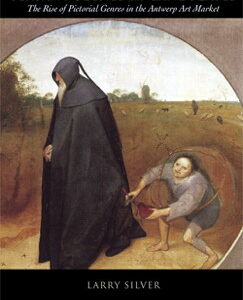
Peasant Scenes and Landscapes: The Rise of Pictorial Genres in the Antwerp Art Market

By Larry Silver (NHC Fellow, 1991–92) Modern viewers take for granted the pictorial conventions present in easel paintings and engraved prints of such subjects as landscapes or peasants. These generic subjects and their representational conventions, however, have their own origins and early histories. In sixteenth-century Antwerp, painting and the emerging new medium of engraving began … Continued

%customfield(subject)%

Radical Cartesianism: The French Reception of Descartes

By Tad M. Schmaltz (NHC Fellow, 1997–98) This is a book-length study of two of Descartes's most innovative successors, Robert Desgabets and Pierre-Sylvain Regis, and of their highly original contributions to Cartesianism. The focus of the book is an analysis of radical doctrines in the work of these thinkers that derive from arguments in Descartes: … Continued

%customfield(subject)%

Reliving Golgotha: The Passion Play of Iztapalapa

By Richard C. Trexler (NHC Fellow, 1997–98) In Reliving Golgotha, Richard Trexler brings an important new perspective to religious spectacle in an engrossing exploration of the annual passion play at Iztapalapa, the largest and poorest borough of Mexico City. After tracing the history of European passion theater, Trexler examines the process by which representations of the passion were … Continued

%customfield(subject)%

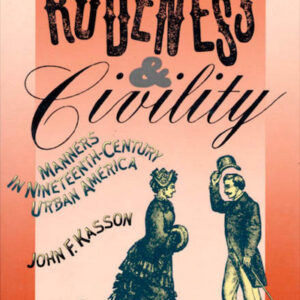
Rudeness & Civility: Manners in Nineteenth-Century Urban America

By John F. Kasson (NHC Fellow, 1980–81; 2009–10) With keen insight and subtle humor, John F. Kasson explores the history and politics of etiquette from America's colonial times through the nineteenth century. He describes the transformation of our notion of "gentility," once considered a birthright to some, and the development of etiquette as a middle-class … Continued

%customfield(subject)%

Screen Nazis: Cinema, History, and Democracy

By Sabine Hake (NHC Fellow, 2010–11) From the late 1930s to the early twenty-first century, European and American filmmakers have displayed an enduring fascination with Nazi leaders, rituals, and symbols, making scores of films from Confessions of a Nazi Spy (1939) and Watch on the Rhine (1943) through Des Teufels General (The Devil’s General, 1955) and Pasqualino settebellezze (Seven Beauties, 1975), up to Der … Continued

%customfield(subject)%

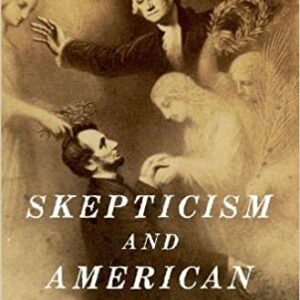
Skepticism and American Faith: From the Revolution to the Civil War

By Christopher Grasso (NHC Fellow, 2016–17) Between the American Revolution and the Civil War, the dialogue of religious skepticism and faith shaped struggles over the place of religion in politics. It produced different visions of knowledge and education in an "enlightened" society. It fueled social reform in an era of economic transformation, territorial expansion, and … Continued

%customfield(subject)%

Space and Self in Early Modern European Cultures

Edited by David Warren Sabean (NHC Fellow, 2008–09) and Malina Stefanovska The notion of ‘selfhood’ conjures up images of self-sufficiency, integrity, introspectiveness, and autonomy – characteristics typically associated with ‘modernity.’ The seventeenth century marks the crucial transition to a new form of ‘bourgeois’ selfhood, although the concept goes back to the pre-modern and early modern … Continued

%customfield(subject)%

Terrestrial Lessons: The Conquest of the World as Globe

By Sumathi Ramaswamy (NHC Fellow, 2013–14) Why and how do debates about the form and disposition of our Earth shape enlightened subjectivity and secular worldliness in colonial modernity? Sumathi Ramaswamy explores this question for British India with the aid of the terrestrial globe, which since the sixteenth century has circulated as a worldly symbol, a … Continued

%customfield(subject)%

The Art of the Crusaders in the Holy Land, 1098-1187

By Jaroslav Folda (NHC Fellow, 1988–89; 1998–99; 2006–07) The Art of the Crusaders in the Holy Land, 1098-1187 examines the art and architecture produced for the invading Crusaders in Syria-Palestine during the first century of their quest to recapture and control the holy sites of Jerusalem, Bethlehem, and Nazareth. Commissioned by kings and queens, patriarchs, … Continued