History Archives | Page 96 of 140 | National Humanities Center

History

%customfield(subject)%

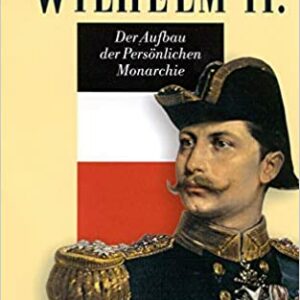
Wilhelm II: Der Aufbau der Persönlichen Monarchie, 1888-1900

By John C. G. Röhl (NHC Fellow, 1997–98) The internationally renowned historian John Röhl presents here the continuation of his "… infinitely knowledgeable and readable" (Gustav Seibt, FAZ) biography of Wilhelm II. The new volume describes that decisive phase of rule known as the building of the personal monarchy. Characteristics of this government phase are … Continued
%customfield(subject)%

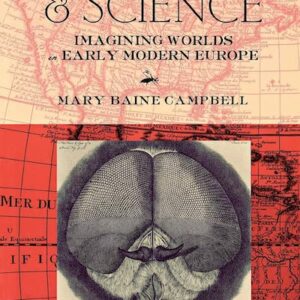
Wonder & Science: Imagining Worlds in Early Modern Europe

By Mary Baine Campbell (NHC Fellow, 1997–98) During the early modern period, western Europe was transformed by the proliferation of new worlds—geographic worlds found in the voyages of discovery and conceptual and celestial worlds opened by natural philosophy, or science. The response to incredible overseas encounters and to the profound technological, religious, economic, and intellectual … Continued

Slave Resistance

Slave resistance began in British North America almost as soon as the first slaves arrived in the Chesapeake in the early seventeenth century. Forms varied, but the common denominator in all acts of resistance was an attempt to claim some measure of freedom against an institution that defined people fundamentally as property. In addition to … Continued

How Slavery Affected African American Families

Slavery not only inhibited family formation but made stable, secure family life difficult if not impossible. A father might have one owner, his “wife” and children another. Family separation through sale was a constant threat. Many owners encouraged marriage to protect their investment in their slaves. Abolitionists attacked slavery by pointing to the harm it … Continued

The Varieties of Slave Labor

Slave labor differed according to period and location. In the 1700s plantation owners tried to maintain self-sufficiency based on the varied skills of their slaves. A slave’s skill level and value to the master often determined how he/she was treated. Lock-step, highly supervised gang labor, replaced traditional patterns of individual work. Race may have influenced … Continued

Rooted in Africa, Raised in America: The Traditional Arts and Crafts of African-Americans Across Five Centuries

Rarely do studies of slavery mention the valuable skills and tangible creations of the millions of Africans brought to the New World. Much is made—and rightly so—of African talents in storytelling, music, and dance but these modes of creative performance do not adequately describe the full range of Africa’s contributions to American culture. The Africans … Continued

The Image of Africa in the Literature of the Harlem Renaissance

Scientific research supported a literary impulse to reconnect black Americans to their African roots. In the early twentieth century African Americans looked for a history that went beyond their time in the United States, beyond slavery. The Harlem Renaissance placed Africa at the center of the African American cultural landscape, and there it remains today.

The Religious Origins of Manifest Destiny

In 1845, an unsigned article in a popular American journal, a long standing Jacksonian publication, the Democratic Review, issued an unmistakable call for American expansionism. Focusing mainly on bringing the Republic of Texas into the union, it declared that expansion represented “the fulfillment of our manifest destiny to overspread the continent allotted by Providence for … Continued

The Demise of Slavery

The institution of slavery was central to the economy and politics of the United States from the colonial era to the Civil War, and its demise was connected to almost every significant development of the country’s history. That demise came in two broad waves of reform—one gradual, largely peaceful, in areas with relatively few slaves; … Continued

American Abolitionism and Religion

The cause of immediate emancipation, as the abolitionists came to define it, had a different germ of inspiration from those Enlightenment ideals that Jefferson had articulated: the rise of a fervent religious reawakening just as the new Republic was being created. That impulse sprang from two main sources: the theology and practice of Quakerism and … Continued