History Archives | Page 138 of 140 | National Humanities Center

History

%customfield(subject)%

Ian Burney, “Presumed Innocent: The Legacy of Erle Stanley Gardner”

In this podcast, Ian Burney, professor of the history of science, technology, and medicine at the University of Manchester, discusses his new book which explores the methods Erle Stanley Gardner and his “Court of Last Resort” used to establish the innocence of those wrongly convicted in an era long before the use of DNA evidence, setting precedents for how we think about establishing innocence up to the present moment.

%customfield(subject)%

Emily Lutenski, “Love, Scandal, and the Legacies of Margery Latimer and Jean Toomer”

After she tragically died in childbirth in 1932, acclaimed novelist and activist Margery Latimer became lost to history. While her work had drawn comparisons to Gertrude Stein and James Joyce, Latimer’s reputation as a writer was overshadowed by her interracial marriage with the poet and novelist Jean Toomer. In this podcast Emily Lutenski, associate professor of American studies at Saint Louis University, discusses Latimer and Toomer’s romantic relationship and intellectual partnership, the scandal that ensued, and the ways their legacies have been shaped as a result.

%customfield(subject)%

NHC Virtual Book Talk: Heaven and Hell: A History of the Afterlife

In clear and compelling terms, Bart D. Ehrman recounts the long history of the afterlife, from the Epic of Gilgamesh to the writings of Augustine, focusing especially on the teachings of Jesus and his early followers. He discusses ancient guided tours of heaven and hell, in which a living person observes the sublime blessings of heaven for those who are saved and the horrifying torments of hell for the damned.

%customfield(subject)%

Calling on the Humanities in the Midst of a Pandemic

As the COVID-19 pandemic crisis has engulfed the planet, most public discourse in the United States has focused on epidemiological characteristics of the disease, the strain it has placed on global healthcare resources and supply chains, the economic devastation it has wrought, and the merits of government response. Often unnoticed in those conversations, however, are the ways that those discussions are steeped in humanistic as much as scientific terms.

%customfield(subject)%

Sonja Drimmer, “Wars of the Roses and the Court of Public Opinion”

The 15th-century Wars of the Roses between Yorkist and Lancastrian factions often summon images of royal intrigue and courtly splendor. Whether it is one of Shakespeare’s plays or a more scholarly account, histories of this struggle for the English throne tend to privilege the nobility. Art historian and NHC Fellow Sonja Drimmer offers a far different perspective of the era. By extending the political sphere beyond the royal court and into the court of public opinion, Drimmer explores how a newly-formed, larger public played an important role in this decades-long conflict.

%customfield(subject)%

Ann Wierda Rowland, “Reading the Readers: Books Clubs of the Past”

Ann Wierda Rowland discusses her current research into a particular coterie of Boston readers at the turn of the twentieth century who regularly gathered to explore the works of John Keats. Through reflecting on the shared reading practices of past audiences, she suggests, we can better understand our own modes of literary engagement in a period that has supposedly witnessed a rapidly declining interest in the written word.

%customfield(subject)%

The U.S. Constitution Then and Now

CANCELED

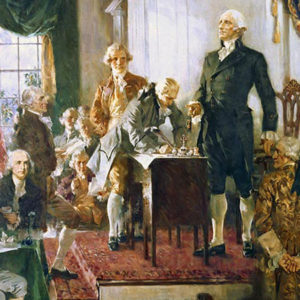
For over 230 years, the U.S. Constitution has served as the central document shaping life and law in the United States. Originally consisting of seven articles, the Constitution has been amended 27 times to meet the changing needs of the country and its citizens. Interpretation of its provisions and the intent of its framers has been debated throughout our country's history.

%customfield(subject)%

100 Years and Counting: The Continuing Struggle for Gender Equality

The centennial of the Nineteenth Amendment’s passage and ratification seems an apt occasion to reflect on the long and ongoing struggle to achieve equality for women and to consider how the ideals of of women’s rights advocates remain unrealized. In fact, scholars need look no further than their campus environments to see how gender-based inequities persist.

%customfield(subject)%

Censoring Slaughterhouse-Five

In this excerpt of a talk given at the National Humanities Center, Robert D. Newman discusses an exemplary humanities moment, when Kurt Vonnegut responded to the banning and burning of Vonnegut’s book Slaughterhouse-Five by school officials in Drake, North Dakota in 1973. Newman notes that this series of historical events involving the kinds of literature … Continued

%customfield(subject)%

The Trial of Lizzie Borden

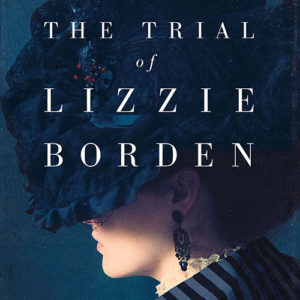
Cara Robertson (Fellow 2004–05; 2005–06) discusses one of the most famous trials in American history, offering not only a detailed account of events but providing a window into life in America’s Gilded Age, showcasing its most deeply held convictions and its most troubling social anxieties.