History Archives | Page 137 of 140 | National Humanities Center

History

%customfield(subject)%

Letter from My Grandfather

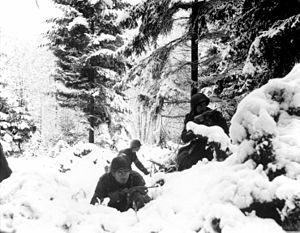
Ina Dixon explains how a letter from her grandfather to her grandmother, written just before the Battle of the Bulge in WWII, reconnects her to her grandfather and the hardships he suffered at the time. Transcript Andy Mink: My name is Andy Mink, I’m the vice president for education at the National Humanities Center. I’m … Continued
%customfield(subject)%

Why We Always Come Back to Abraham Lincoln

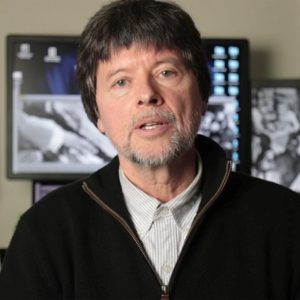
Ken Burns describes how lines from a historic speech given by 29-year-old Abraham Lincoln have “haunted and inspired” him for nearly 40 years. Expanding on what is revealed in those sentences, Burns discusses how they speak not only to Lincoln’s basic character and optimism, qualities that proved essential to his presidency. He goes on to … Continued

%customfield(subject)%

Answering the Question “Who Are We?”

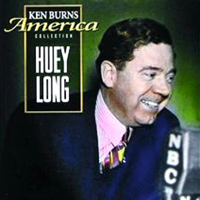
In this short video, documentary filmmaker Ken Burns recalls having Robert Penn Warren read a passage from his novel All the King’s Men during the production of the Huey Long portion of his documentary series “Ken Burns’ America.” He notes that it is voices like Warren’s that have helped animate his work, bringing to life … Continued

%customfield(subject)%

NHC Virtual Book Talk: Sisters and Rebels: A Struggle for the Soul of America

Sisters and Rebels follows the divergent paths of the Lumpkin sisters, who were “estranged and yet forever entangled” by their mutual obsession with the South. Tracing the wounds and unsung victories of the past through to the contemporary moment, Jacquelyn Dowd Hall revives a buried tradition of Southern expatriation and progressivism; explores the lost, revolutionary zeal of the early twentieth century; and muses on the fraught ties of sisterhood.

%customfield(subject)%

Katherine Mellen Charron, “Activism Beyond the City: Women, Rural Communities, and the Struggle for Black Freedom”

When mapping the struggle for Black freedom and racial justice, historians have often emphasized the events and organizational efforts that occurred in urban areas, largely led by men. However, in rural American communities, the voices and leadership of women were extremely influential. In this podcast, Katherine Mellen Charron, associate professor of history at North Carolina State University, discusses her research into the legacies of local, community-based, rural Black women’s activism in North Carolina.

%customfield(subject)%

Marsha Gordon, “Narrating Modern Women’s Experiences: The Complex Legacy of Ursula Parrott”

In the 1930s, the writer Ursula Parrott used her novels, short stories, and screenwriting ventures to portray independent women during a period of immense social change in America. Despite this, like many women writers, Parrott’s legacy has been all but erased from the popular imagination. In this podcast, Marsha Gordon, professor of film studies at North Carolina State University, delves into the way that Parrott’s independence and professional success existed in a complex relationship to her rather conservative views on gender.

%customfield(subject)%

Simon Middleton, “Changing Forms of Value: The Shift to Paper Money in Eighteenth-Century America”

We tend to think of money as a familiar object that plays a role in our everyday lives. However, when we consider the changing nature of currency in colonial America, money appears differently—as a “social technology for the distribution of value.” Because money allows individuals to represent and share value in direct and visible ways, the use of paper money in the United States in the eighteenth century supplemented social connections and bolstered economic consumption. In this podcast, historian Simon Middleton from the College of William & Mary discusses how his work examines the cultural, legal, and social dimensions of money.

%customfield(subject)%

NHC Virtual Book Talk: “Most Blessed of the Patriarchs”: Thomas Jefferson and the Empire of the Imagination

“Most Blessed of the Patriarchs” looks to shed light on perhaps the most complex of America’s Founding Fathers. Two of the world’s leading scholars of Jefferson’s life and accomplishments, Annette Gordon-Reed and Peter S. Onuf, join forces to fundamentally challenge much of what we think we know and help create a portrait of Jefferson that reveals some of the mystery at the heart of his character by considering his extraordinary and capacious mind and the ways in which he both embodied and resisted the dynamics of his age.

%customfield(subject)%

Christina Snyder, “Slavery After the Civil War: How Bondage Persisted in the United States and its Territories”

As commonly understood, slavery in the United States officially came to an end with the surrender of the Confederacy and the passage of the Thirteenth Amendment. Yet various forms of human bondage and forced labor continued across the United States and its territories long after the conclusion of the Civil War and into the twentieth century. In this podcast, historian Christina Snyder from The Pennsylvania State University discusses her work, examining why multiple forms of unfree labor and bondage persisted across the United States long after chattel slavery was abolished.