History Archives | Page 127 of 140 | National Humanities Center

History

%customfield(subject)%

Scholar-to-Scholar Talk: “The Price of Injustice”

Reckoning with the centuries-long toll of treating African Americans as less than their fellow citizens is a challenging task, requiring us to consider not only what has been extracted from and denied the mistreated but the costs borne by all of us. Though these three scholars focus on different periods and places in this country's history with quite different sources, approaches, and questions, their work illuminates the myriad ways that racism and systemic injustice affect us all.

%customfield(subject)%

NHC Virtual Book Talk Series: Toward A More Perfect Union: The American Experiment

September 30–October 28, 2020 | The next series of the National Humanities Center's popular Virtual Book Club will examine our democracy—its history, accomplishments, failings, and current challenges. This series will explore if and how the framers’ vision of humanistic values in American principles has been sustained as well as the aspirations and fallibilities inherent in the continuous struggle for “the soul of America.”

Madness in the City of Magnificent Intentions

NHC Virtual Book Talk: Madness in the City of Magnificent Intentions: A History of Race and Mental Illness in the Nation’s Capital

Martin Summers argues that assumptions about the existence of distinctive black and white psyches shaped the therapeutic and diagnostic regimes in Saint Elizabeths hospital and left a legacy of poor treatment of African American patients, even after psychiatrists had begun to reject racialist conceptions of the psyche. Yet black patients and their communities asserted their own agency and exhibited a “rights consciousness” in large and small ways, from agitating for more equal treatment to attempting to manage the therapeutic experience.

%customfield(subject)%

NHC Virtual Book Talk: The Contested Murder of Latasha Harlins: Justice, Gender, and the Origins of the LA Riots

Brenda Stevenson explores the long-simmering resentment within LA's Black community that ultimately erupted in April 1992 by focusing on a preceding event that encapsulated the city's growing racial and social polarization: the 1991 shooting of a fifteen-year old African American girl, Latasha Harlins, by a Korean grocer who suspected her of shoplifting. Stevenson provides a meticulous account of the case and its aftermath, and uses the lives of the three protagonists to explore the intertwined histories of three immigrant ethnic groups who arrived in Los Angeles in different eras: Blacks, Koreans, and Jews.

%customfield(subject)%

Being Nobody

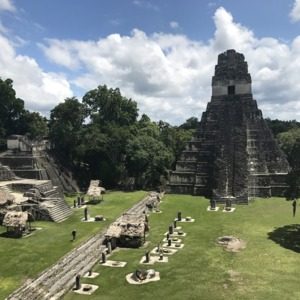
I had never felt so small, in the moments I sat and looked down towards the trees and pyramids surrounding me. Where I sat was the top of The Masks Temple, it was a gift from the king Jasaw Chan K’awiil I in honor of his queen Lady Kalajuun Une’ Mo’. The Mayans had slept, … Continued

%customfield(subject)%

Visiting the Anne Frank House

At the age of 16, I had the opportunity to travel to Amsterdam with my family. Even at an early age, I had a genuine interest in history and different cultures of the world, and I had never traveled outside of the country, so I was very excited about this trip. In our travels through … Continued

%customfield(subject)%

Coming Into My Feminist Consciousness

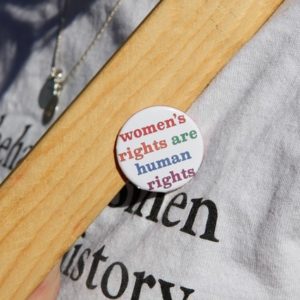
My Humanities Moment occurred during my Junior year in college, when I attended an evening session with Gerda Lerner, the author of The Creation of Feminist Consciousness and one of the founders of the academic field called women’s history. I read only short sections of the book assigned in my women’s studies class. (The course … Continued

%customfield(subject)%

Turning Historical Events into Modern Reflective Inquiries

For years, every time we covered World War II and the Holocaust in school it was just a fact memorization activity. “Hitler was bad and did bad things.” When I was afforded the opportunity to travel to Germany, Poland and the Czech Republic in college, I got to look at the Holocaust in a new … Continued

%customfield(subject)%

How Baseball Leads to Profound Moments

This past summer, my son was offered an opportunity to represent the United States and play baseball in Belgium and Holland. Naturally, I took one for the team and volunteered to chaperone him on the 10-day tour. I had never been to the Continent, only to England and Scotland, and was eager to collect more … Continued

%customfield(subject)%

The Inca Trail

Sure, I had studied the Incas in school. I knew about Machu Picchu or I thought that I did. “You cannot judge a man until you walk a mile in his shoes” from To Kill a Mocking Bird describes my moment. The trail went through the Andes, we were able to interact with local villagers. … Continued