
Research Spotlight
Humanities and the Natural World
This month we highlight 2025–26 Fellows whose projects examine the complex relationships between humans and the natural world as revealed in depictions of fauna and flora.
Featured Projects


Travis W. Proctor
Multispecies Perspectives on Jesus in Early Christianity

Sarra Tlili
From Sanctity to Rights: Animal Ethics in Islam
Collating Nature: Illustrating Bencao Books in Ming China
Ruiying Gao
Assistant Professor of Art History, Wake Forest University
Ruiying Gao teaches East Asian art at Wake Forest University. Her research fields include the intersections of natural history and the pictorial arts, book culture, and the work of women artists. Her current project examines the social history of materia medica images in China during the Ming dynasty (1368–1644).
NHC: What was the initial spark that led you to this project? What are the big questions you are considering?
RG: While studying bird-and-flower paintings in pre-modern China during grad school, I noticed illustrations of medicinal plants. I soon learned these belonged to the intellectual tradition of bencao (commonly translated as materia medica), a body of knowledge on natural materials—like plants, animals, and minerals—used for therapeutic purposes. I then found that many were in illustrated books that proliferated in China during the Ming dynasty (1368–1644), a discovery that led me to my current project. My project addresses two central questions: First, why were so many illustrated bencao books produced in the Ming, and what purposes did they serve? Second, how can we use these illustrated books to understand the Ming people’s knowledge of natural species, especially their perceptions of the human-nature relationship during that time?
NHC: In the course of your research, have you run across anything that genuinely surprised you? What can you tell us about it?
RG: Yes, I was most surprised to discover that visual credibility in these illustrated books of bencao was not necessarily linked to empirical observation. While many images appear meticulous and detailed, giving the impression that they were based on firsthand studies of actual species, a large number of them were in fact copied from one book to another. The culture of book production in the Ming placed a high value on copying, revising, and recycling material from earlier, classic works. Rather than being seen as plagiarism, this practice actually lent a new work credibility and authority by grounding it in a respected lineage of knowledge. This tension between the appearance of empirical accuracy and the reality of a copying-based tradition is a fascinating aspect of my research.
NHC: What new avenues of inquiry do you hope this research will prompt or make possible in your field?
RG: I hope this research will open up two new avenues of inquiry within my field. First, I aim to broaden the materials we study in the visual culture of China. Illustrated books, particularly non-narrative works like those I am studying, have been understudied by both art historians and book historians. By focusing on this material, I hope to enrich our understanding of visual culture beyond subjects like paintings, sculptures, and calligraphy. Second, I hope this research will open up possibilities for comparative studies of “natural history” illustrations across cultures. As I am a researcher always interested in the depiction of natural species across different societies, this project will lay the groundwork for a broader comparative analysis between illustrated bencao books in China and similar traditions around the world.
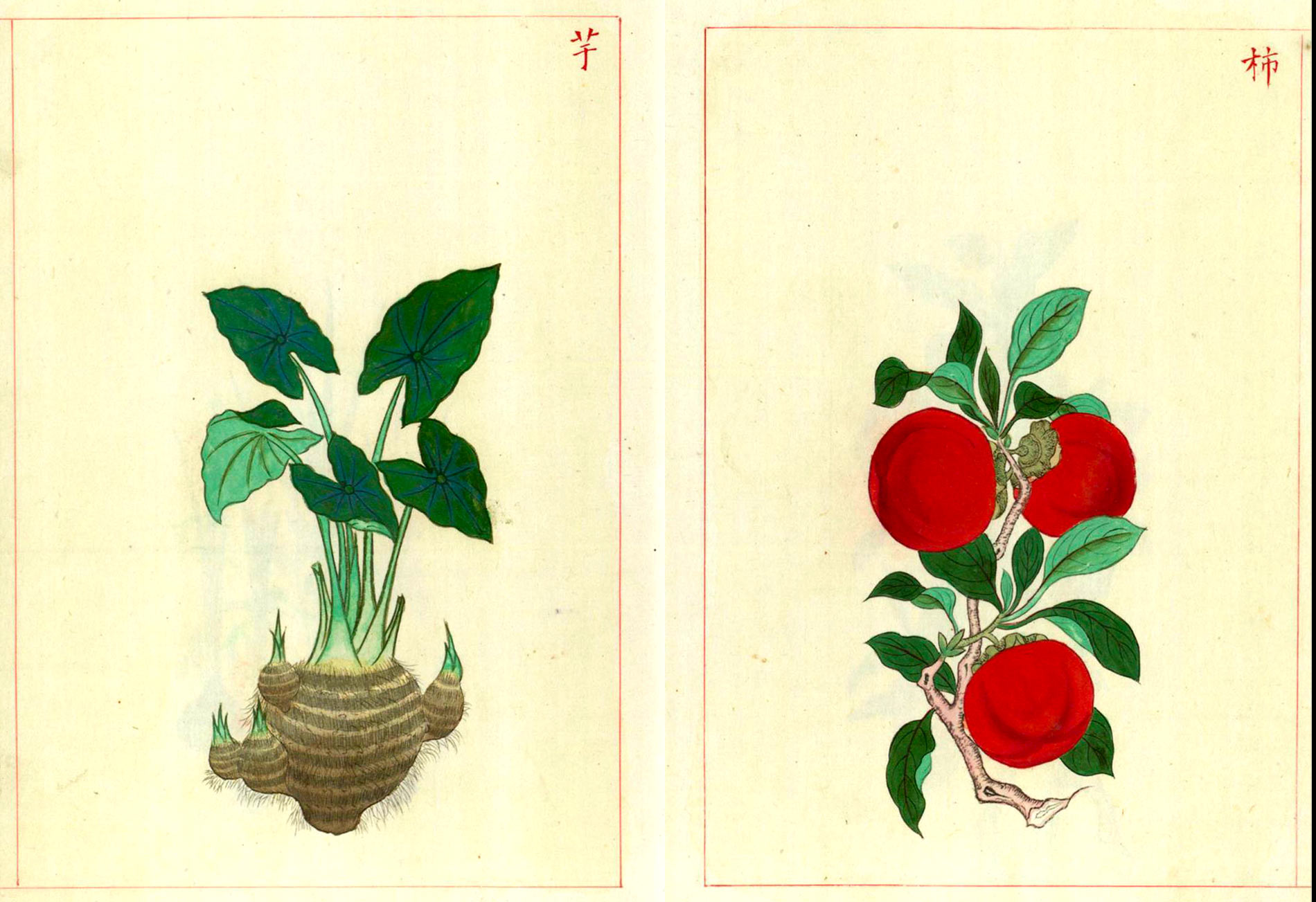
Image: Illustrations of the taro and the persimmon in Wen Shu (1595-1634), Depictions of Minerals, Insects, Herbs, and Trees (Jinshi kunchong caomu zhuang 金石昆蟲草木狀), 1617-1620, ink and color on papers, twelve-volume book, National Central Library, Taipei. This is an example of illustrated bencao books made as manuscripts in the late Ming. Intriguingly, the book was illustrated by a prominent women artist, Wen Shu, and she copied the images from an earlier book of bencao. Wen’s work is the focus of a chapter in my book.
Multispecies Perspectives on Jesus in Early Christianity
Travis W. Proctor
Associate Professor of Religion, Wittenberg University
Travis W. Proctor is an associate professor of religion at Wittenberg University (Ohio). He specializes in religions of the ancient Mediterranean, with a focus on the histories of Christian cultures in the ancient world (ca. 50–300 CE). His research draws on perspectives from cultural studies, gender studies, and the environmental humanities to demonstrate how the histories of religious cultures have continuing significance for society today.
NHC: What was the initial spark that led you to this project? What are the big questions you are considering?
TP: I first got interested in this project during work on my first book, on early Christian demonologies. There I encountered discussions among early Christians where the nonhuman (e.g., demons) featured prominently in how early Christian identity was negotiated and performed. While not the focus of my book, I noted how this more-than-human world was significant in particular for early Christian understandings of Jesus. Some of the big questions I’m considering include: How did images of animals and objects factor into early Christian theorizing about the nature and identity of Jesus? What can these images tell us about early Christianity? Should such metaphors change the way we think about the link, so often posited, between anthropocentrism and Christianity?
NHC: In the course of your research, have you run across anything that genuinely surprised you? What can you tell us about it?
TP: I have been generally surprised by the intensity and variety of animal and object metaphors that early Christians used to describe Jesus and his mission or significance. While many are familiar with prominent biblical metaphors such as the lamb or the “vine and branches,” there are many others that were prominent in early Christianity and yet less-well-known today. These include images of Jesus as deer, goat, or serpent, as well as an inanimate object (e.g., a rock or cross). What’s more, these animals and objects are often invested with agency—one early Christian text portrays a cross walking and then speaking on behalf of Jesus. My project wants to understand how this “enlivened” world of animals and objects played a role in the formation of early Christian culture.
NHC: What new avenues of inquiry do you hope this research will prompt or make possible in your field?
TP: I hope to open new avenues of considering how issues relating to animals, the environment, and materiality are significant for religions of the ancient Mediterranean, particularly early Christianity. I also hope to demonstrate how ancient religions provide important and interesting avenues through which to explore more contemporary concerns, such as, what is the relationship between humans and the environment, both historically and today? How have our religious cultures shaped our natural environments, and how have nonhuman environments shaped human religiosity?
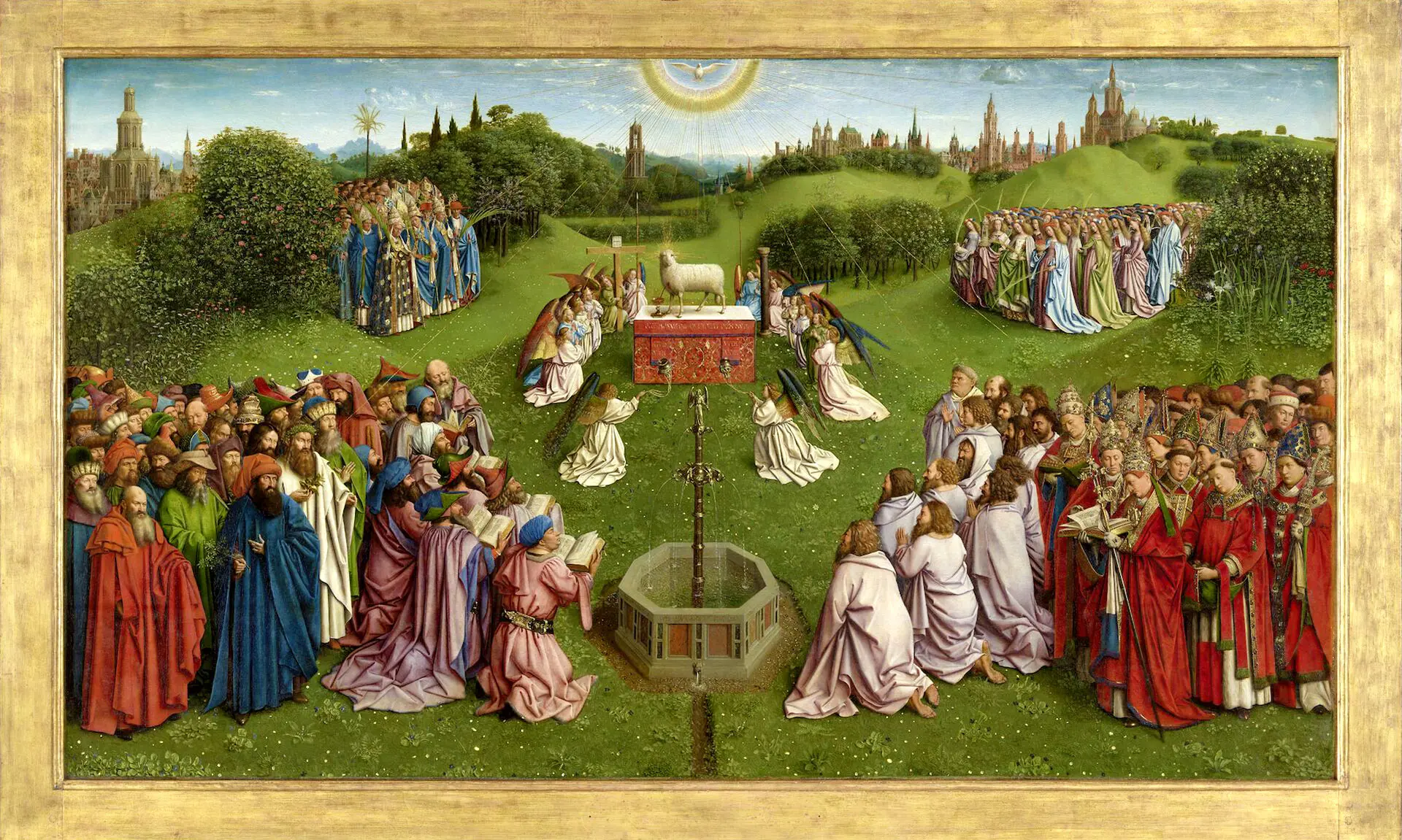
Image: Panel from the Ghent Altarpiece (completed in 1432), by Hubert and Jan van Eyck, depicting the “adoration of the mystic lamb.” Literary depictions of Jesus as an animal and object constitute the focus of my research project. This piece depicts in rather stark form the image of Jesus receiving adoration as an animal.
From Sanctity to Rights: Animal Ethics in Islam
Sarra Tlili
Associate Professor of Religious Studies, University of Florida
Sarra Tlili is an associate professor of Arabic literature at the University of Florida in the Department of Languages, Literatures, and Cultures. Her main areas of research are animal and environmental ethics in Islam, Qur’anic stylistics, and tradition and modernity in Arabic literature.
NHC: What was the initial spark that led you to this project? What are the big questions you are considering?
ST: As a graduate student, I encountered Islamic texts that articulated strikingly unconventional views about animals, revealing that many medieval Muslim authors held perspectives far less anthropocentric than those dominant today. This discovery deeply intrigued me and set me on a research path in which animal themes within Islamic tradition became my central focus. My first book examined these themes in Islam’s foundational source, the Qur’an. I am now extending this inquiry to Islam’s second scriptural source, hadith.
NHC: In the course of your research, have you run across anything that genuinely surprised you? What can you tell us about it?
ST: Plenty. First, my research led me to engage with the field of animal behavior. I no longer subscribe to the view that animals are driven by hardwired instincts; there is far more happening in their minds, and they do exercise agency. Second, my work drew me into debates about the history and authority of hadith, where I came to see how modern scripturalism in Islam—the tendency to privilege written sources—has gone hand in hand with anthropocentric assumptions. A third surprise has been realizing just how deeply anthropocentric modern science is. By reducing the nonhuman world to a machine whose patterns must be uncovered and whose resources must be placed in human service, it has stripped a once-vibrant, meaning-filled world of its vitality.
NHC: What new avenues of inquiry do you hope this research will prompt or make possible in your field?
ST: I hope this research opens new avenues. First, it brings early Islamic texts into conversation with animal studies and environmental humanities, challenging the field’s Western focus and showcasing the richness of non-Western traditions. Second, it raises questions about agency—how animals, insects, and even inanimate beings were cast as historical actors in hadith, and what that adds to debates on subjectivity and the more-than-human. Third, it offers a fresh lens on Islamic thought itself, inviting reevaluations of scripture, law, and theology. Ultimately, I aim to inspire a more inclusive, less anthropocentric vision of both Islamic intellectual history and animal studies.
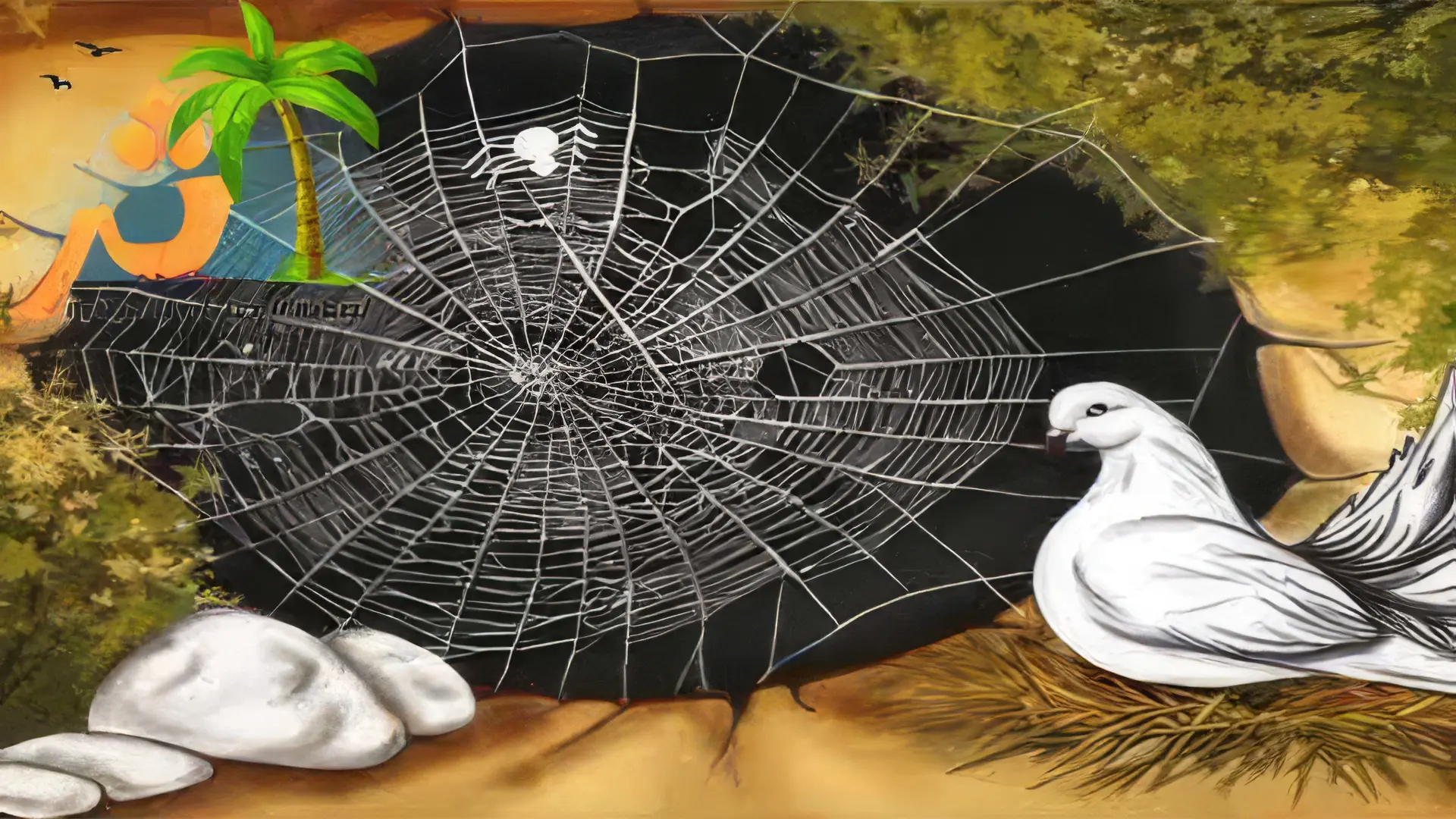
Image: Spider and doves concealing the Prophet from his enemies as he fled Mecca. The image shows how nonhuman animals were perceived as partners in Islam’s sacred history.
Learn More
Featured Research
Points of View
Oct 1, 2026
This month we showcase Fellows examining how different perspectives spur creativity, reveal hidden histories, and connect realms of thought in unexpected ways.
Featured Research
HBCU Scholars
Aug 5, 2026
Highlighting the research of Fellows who are part of the Center’s ongoing initiative to support scholars from Historically Black Colleges and Universities.