
Research Spotlight
Suffering, Narrative, and the Public Sphere
Why does involuntary servitude persist in the United States? How might we challenge emergent and long-standing antivaccination sentiments? What can we learn from the experiences of exploited migrant workers? This month, we highlight the research of 2025–26 Fellows whose projects examine how the ways we characterize and tell stories about human rights and public policy issues impact what we think about them.
Featured Projects

Claire Seiler
The Narrative Lives of Polio
Field Ghosts: The Vanishing American Farmworker and the New Slavery
Karin L. Zipf
Professor of History, East Carolina University
Karin Zipf is a professor of history at East Carolina University, where she has taught courses on American history, history of the US South, and history of gender, sexuality and US women for 25 years. Her research concentrates on labor, gender, sexuality, incarceration, eugenics, agriculture, and human trafficking in the American South in the nineteenth and twentieth centuries.
NHC: What was the initial spark that led you to this project? What are the big questions you are considering?
KZ: My father planted the seed of the question that would drive my academic career and launch me on this book project that brings me to the National Humanities Center. “Why does involuntary servitude persist in the United States?” For many years Dad served a rural hospital in eastern North Carolina as a forensic pathologist. He frequently conducted autopsies on workers that died in the fields or in the migrant camps. From him I learned the visceral characteristics of debt peonage, where an employer forces an employee to work in order to pay a debt, whether real or imagined. It is many years later, and I am still researching and writing about forms of forced labor and “modern slavery.” This book project examines the late twentieth-century intersections of agricultural labor, human trafficking and immigration reform in the 1970s and 1980s.
NHC: In the course of your research, have you run across anything that genuinely surprised you? What can you tell us about it?
KZ: I am continuously shocked by the pervasive racism, class stereotyping and misogyny that some growers exhibited towards agricultural workers. Growers acted and spoke as if field laborers were subhuman or primitive. They fought adamantly against any regulation requiring even the most basic sanitation and hydration facilities. Workers all drank water from the same soda bottle or cup. Agricultural workers had no water to wash themselves after exposure to pesticides. They had no toilet facilities at all, forcing them to relieve themselves in the fields or in the woods alongside the fields. Portable toilets, if provided at all, were dropped off at the roadside, making it nearly impossible for a worker deep in a long row in a vast field to access it. Not surprisingly, women workers suffered most.
NHC: What new avenues of inquiry do you hope this research will prompt or make possible in your field?
KZ: I’d like readers to understand that not only does forced labor exist, but there are ways to recognize it and to eradicate it. Forced labor is caused by systemic processes. It is true that individuals can enslave other individuals through debt peonage or withholding immigration papers or other documents. But government policy (or lack thereof) at a macrocosmic level creates the contours of how forced labor happens in the microcosm. Farm policies, the role of agribusiness and multinational corporations, international trade and colonial guest worker programs impact the actions and relationships of employees and employers in the field. Each chapter in my book project locates intersections of these dynamics and explains how individuals responded in historical context.
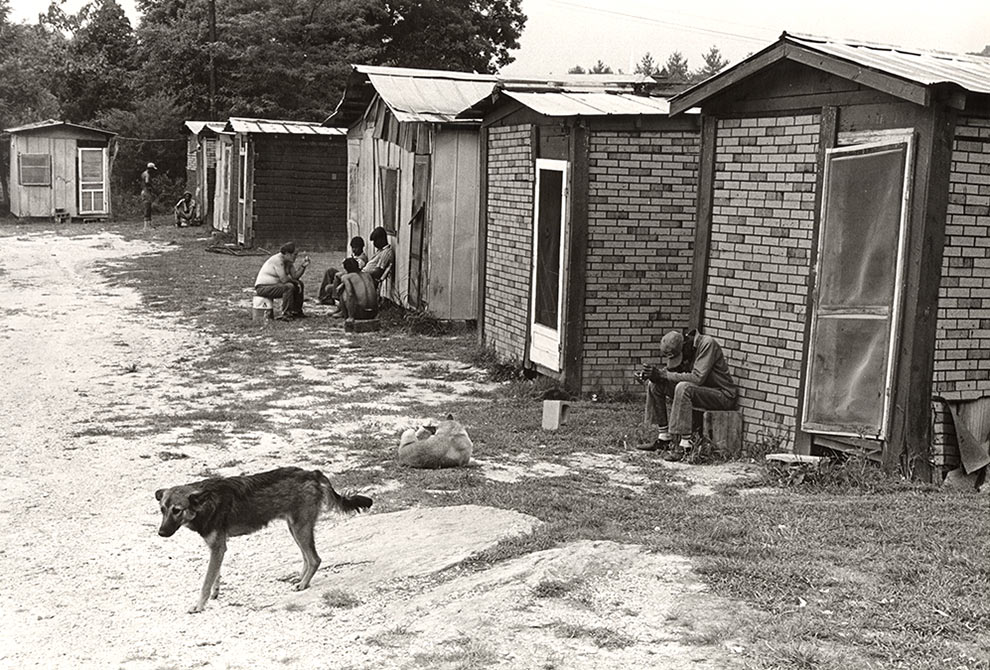
Image: In 1979, Dr. John Moses, a physician at Duke University, researched rural health at farmworker housing camps. This photograph, taken near Asheville, North Carolina, represents typical farm worker housing addressed in this study. John Moses Photographs, box 2, Rubenstein Library Collection, Duke University.
The Narrative Lives of Polio
Claire Seiler
Professor of English, Dickinson College
Claire Seiler is professor of English at Dickinson College. Her research and teaching focus on modern and contemporary English, Irish, and US literatures; the health humanities; poetry and poetics; and disability studies. Her current book project, The Narrative Lives of Polio, recovers the literary history of poliomyelitis from a dangerous vaccine oblivion. The book begins in the 1880s, when polio shifted from endemic presence to epidemic threat, and ends around 1965, a decade after the arrival of the first vaccines.
NHC: What was the initial spark that led you to this project? What are the big questions you are considering?
CS: There has been persistent effort in the United States to block or undermine even modest improvements to the equity and accessibility of health care and the quality of public health. Frustrated with another flurry of attacks on health in 2019, it occurred to me to research the emergence of literary modernism amid the rise of scientific public health. Why did literary studies have so little to say about how modernist experimentation reflected, engaged with, or perhaps even was premised on new public infrastructures? At the time, I was finishing up my first book, which focuses on the immediate aftermath of World War II. Those mid-twentieth-century years were also the worst years of epidemic polio. So I decided to start close to home, and began my would-be public health book by digging in on polio. When COVID-19 hit, polio took over.
NHC: In the course of your research, have you run across anything that genuinely surprised you? What can you tell us about it?
CS: As COVID vaccination campaigns began in the winter of 2020, polio seemed to be everywhere—more accurately, polio narratives seemed to be everywhere. There were feature stories in which Americans over 70 recalled receiving the first polio vaccine; there was the story about how the second polio vaccine had inspired the song “Spoonful of Sugar,” from the film Mary Poppins. Such stories aimed to offer hope and counter anti-vaccinationism at a moment when the world sorely needed both things. But they were also not about polio; they were about the polio vaccines. And they replayed a set of sanitizing narrative patterns that, as much as mass vaccination, helped to enable a broad and consequential forgetting of polio among all but those who’d had it, been directly affected by it, or, in parts of the Global South, continue to contract it.
NHC: What new avenues of inquiry do you hope this research will prompt or make possible in your field?
CS: Many of the writers and texts I’m studying anticipated or resisted the dominant narrative of polio that had consolidated by the 1940s and was exported globally after World War II by a veritable US polio culture industry. We have a lot to learn from their formal inventiveness, representational strategies, and thwarted receptions. (My project concludes with a novel that’s never been published in the US and that undoes the influential claim that pain defies language. Sadly, and ever more urgently in our moment, the literary history of polio helps to contextualize and challenge anti-vaccinationist sentiment without sliding into dangerous midcentury nostalgia, stoking fear of disability, or demonizing the vital work of health care and public health.
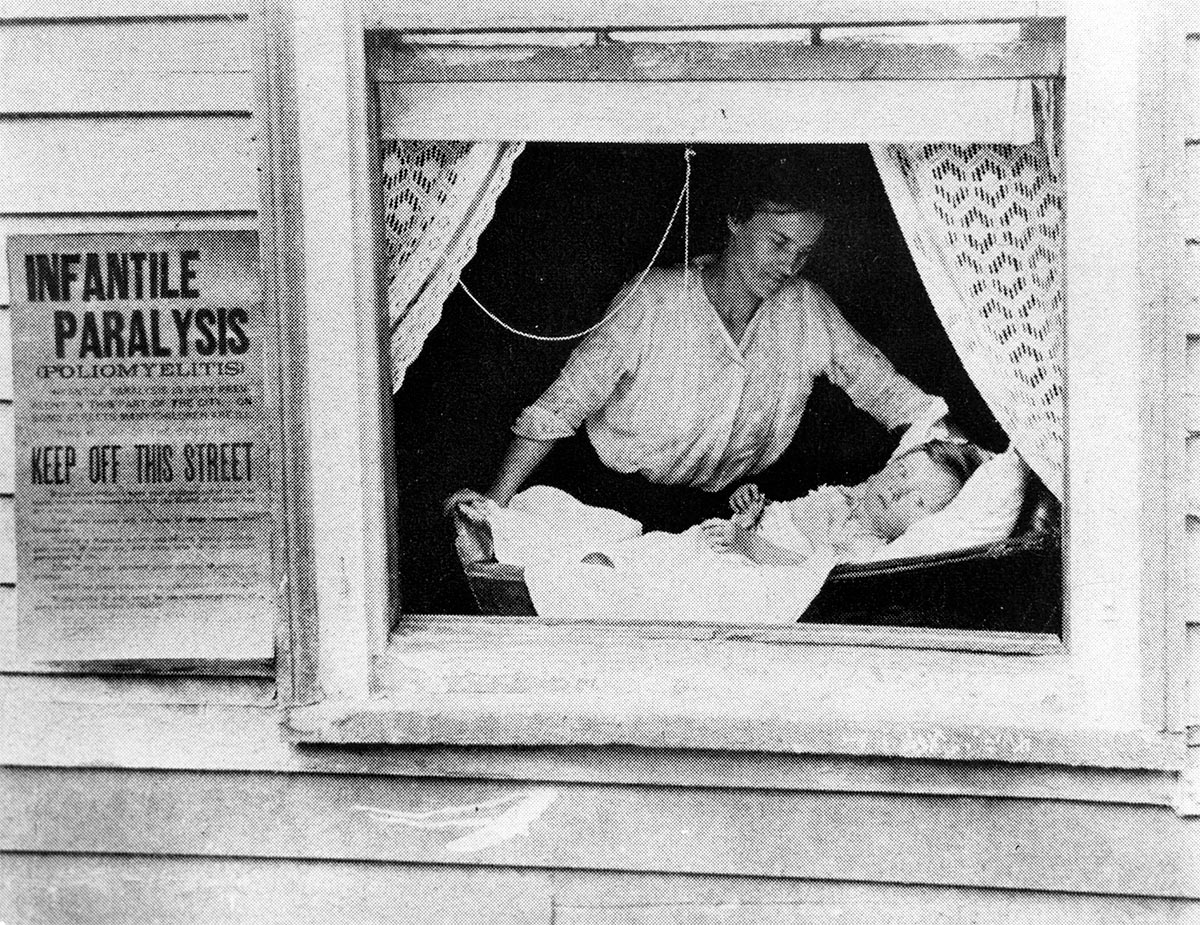
Photo from 1916 polio epidemic in New York City. Credit: March of Dimes Archives.
A Century of Guest Workers: Exploitation and Inequality on American Farms
Mireya Loza
Associate Professor of History and American Studies, Georgetown University
Mireya Loza is an associate professor in the Department of History and the American Studies Program at Georgetown University. Her areas of research include Latinx history, social movements, labor history, and food studies. Her second book project, A Century of Guest Workers, Exploitation, and Inequality on American Farms, builds on her expertise in the systems of contracting foreign workers in US agriculture and explores its broader implications for immigration policy, labor rights, and human rights.
NHC: What was the initial spark that led you to this project? What are the big questions you are considering?
ML: After publishing my first book, Defiant Braceros: How Migrant Workers Fought for Racial, Sexual, and Political Freedom, I was left with questions about America’s dependence on foreign labor throughout the twentieth century and into the twenty-first. While writing Defiant Braceros, I could not ignore the rapid rise of the H-2A visa program, which, much like the Bracero Program, allows foreign workers to enter the U.S. on temporary visas to labor in agriculture. I followed news reports and spoke with workers whose stories resonated deeply with those of the braceros. These conversations also made me think back to the very first Mexican workers recruited during World War I, and I began to wonder about their experiences and the experiences of workers in other US guest worker programs.
NHC: In the course of your research, have you run across anything that genuinely surprised you? What can you tell us about it?
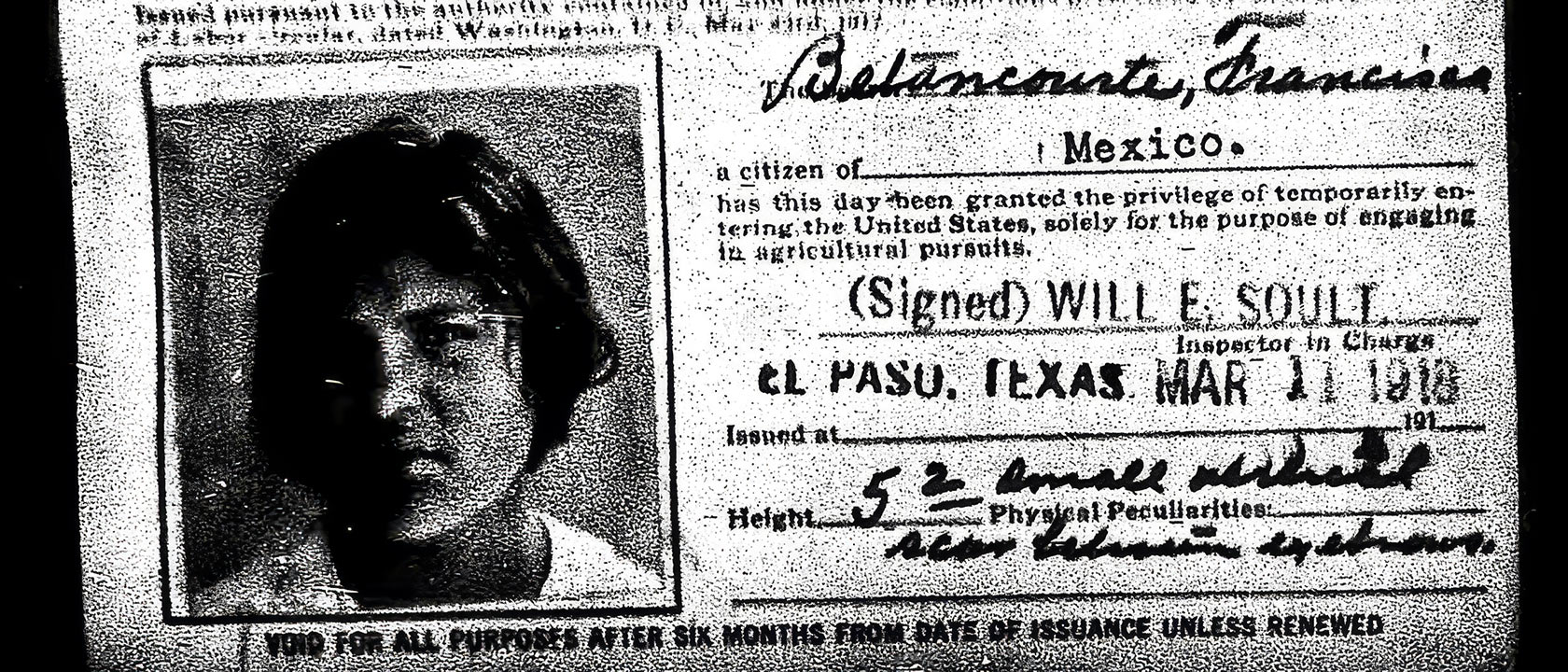
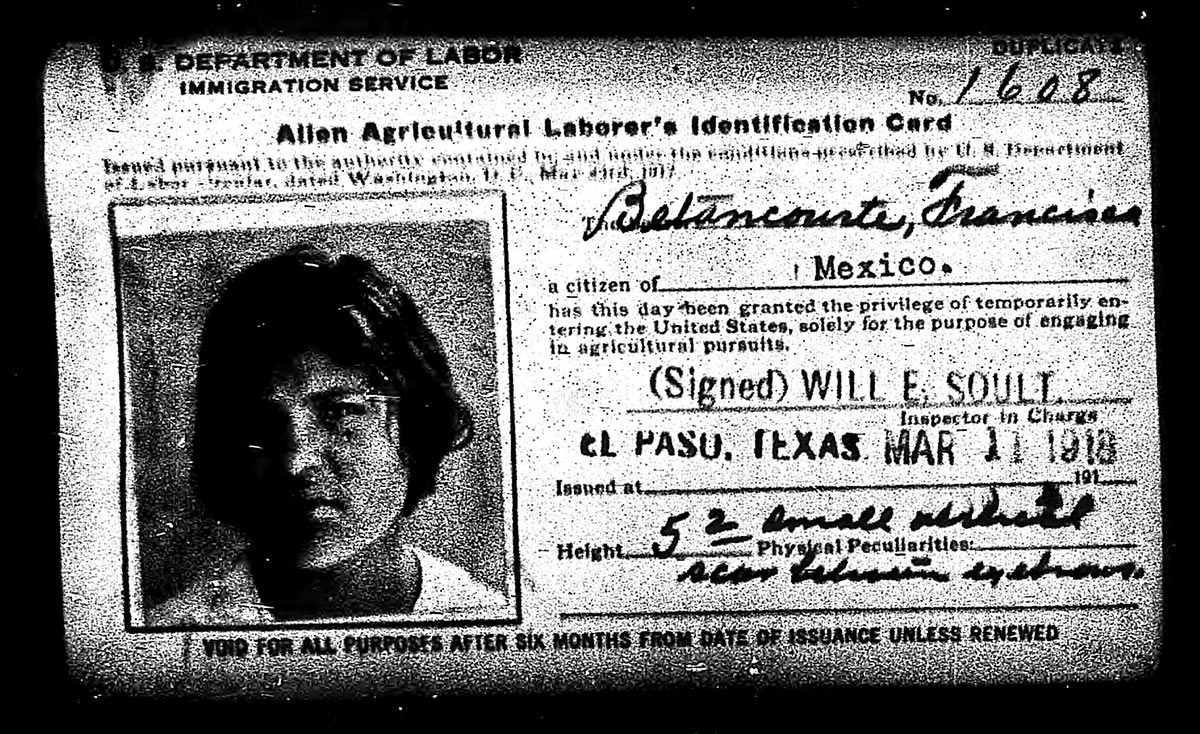
ML: When I began researching the first Mexican Contract Labor Program, I was struck to find that women and children were also incorporated as laborers, particularly in agriculture. Tracing the stories of specific families led me to sixteen-year-old Francisca Betancourte, who, along with her parents, refused to sign a contract extension in 1918. She joined 105 other workers in rejecting the terms offered by the Utah-Idaho Sugar Company, a company notorious for overcrowded and unlivable housing, unfair wage deductions, and harsh working conditions. I read Francisca’s refusal as an act of protest, a powerful assertion of agency from a young woman who refused to accept exploitation.
NHC: What new avenues of inquiry do you hope this research will prompt or make possible in your field?
ML: By centering the experiences of the first Mexican contract workers and linking those to the contemporary experiences of H-2A workers this project encourages scholars to rethink narratives that treat guest worker programs as exceptional or temporary responses to labor shortages. Instead, it highlights how reliance on foreign workers was cultivated by design through policy choices and grower influence. Ultimately, I want this research to make it possible for the field to connect the history of contract labor programs with contemporary debates about immigration, deportation, labor rights, and food systems.
Image: Francisca Betancourte’s Alien Agricultural Laborer’s Identification Card, 1918
Learn More
Featured Research
African American Creators
Jul 1, 2026
Black Americans have shared their experiences and perspectives across creative genres and challenged how we think about music, fiction, and art.
Featured Research
Representation and Resistance
Jun 2, 2026
Complicated dimensions of political affiliation, organization, and resistance are created from intersections of ideology, imagination, and commitment.