
An Unconventional But Distinctly Human Path
Pablo Ávila
Emerging Scholar, University of Memphis
National Humanities Leadership Council Member
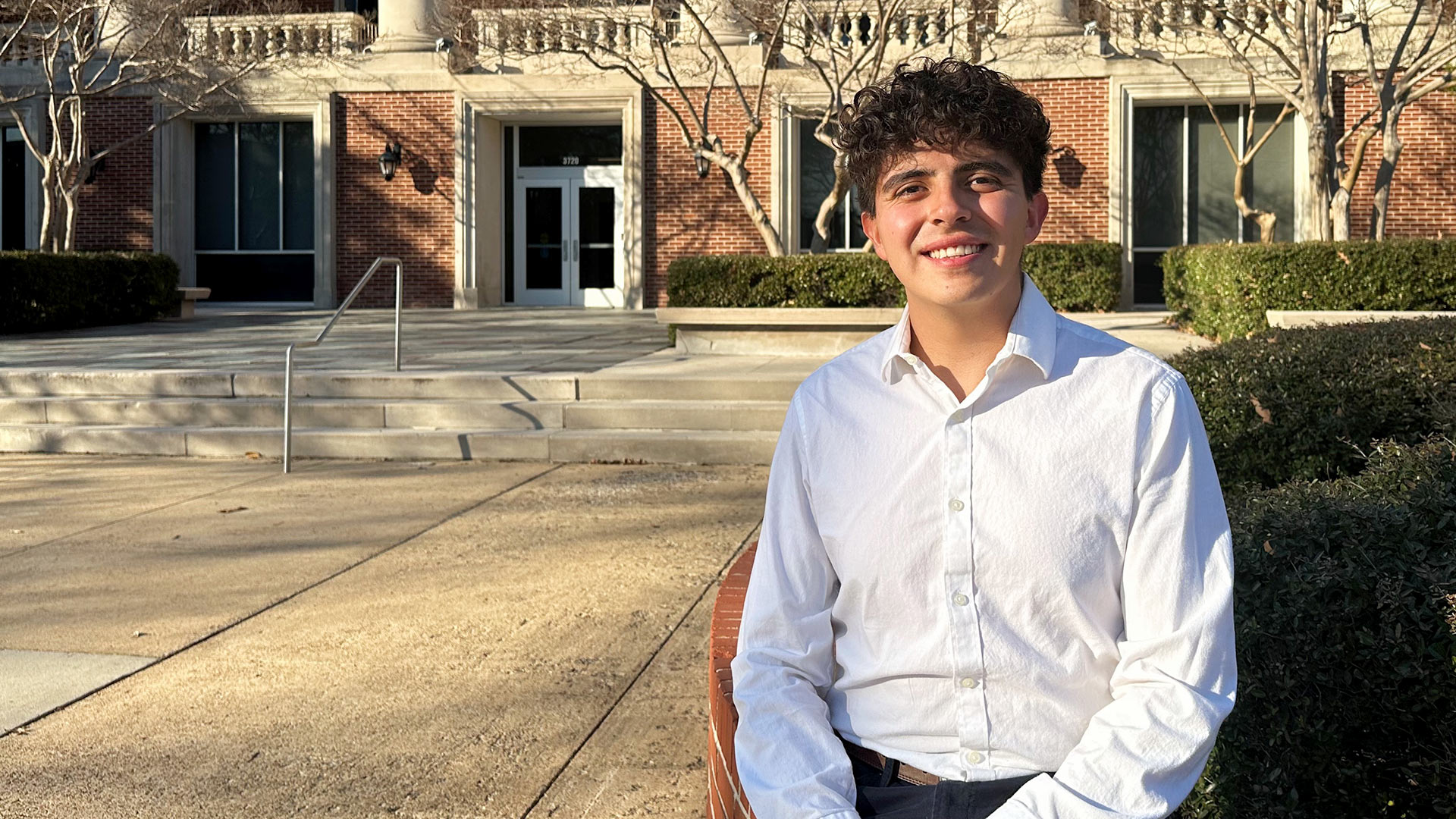
Emerging Scholar Pablo Ávila follows his own path, and at the University of Memphis, his path looks different from those of his classmates.
Born and raised in Bogotá, Colombia, Ávila debated between pursuing studies in engineering or in the music business. Experiences from his childhood pulled him in a different direction. “In high school, elementary, and middle school, we did a lot of service trips and projects around Colombia,” said Ávila. “We would visit different communities. Most of them were very impoverished, and we would partner with different schools, rehab centers, or orphanages. We would teach them English, teach them music, be with the kids, provide activities for the kids. I just really loved that. That was one of my biggest highlights from school.”
After graduating from high school, Ávila decided to do similar work abroad. “That took me to a program in Mexico, where it was a year of helping and serving the different communities across the country. We helped build different houses and community centers. We taught English language courses and music in orphanages and rehab centers. I was also the lead translator between the Spanish-speaking community and our team, which was mostly English-speaking. I helped with most of the translating and communicating the needs and the wants of the community to our team, then discussed the needs with the leadership to see how we could best serve them.” Ávila was on his way to being a servant leader.
In order to best serve a community, you really need to understand its culture.
When he completed the year of service in Mexico, Ávila began his college career, but his time serving in communities with need made him rethink his major. He sought his father’s advice. “Talking with my Dad, I told him that I loved the community program. I loved the people. It opened my eyes to what culture is, the idea of culture, and how in order to best serve a community, you really need to understand its culture. It was a really cool experience, but I did see that there were things we could have done better if we understood their culture a little bit more. That’s when my Dad said, ‘Well, anthropology studies culture.’” The course was set. Ávila researched different anthropology programs in the United States and decided on the University of Memphis.
Joining the National Humanities Leadership Council
The double major in Anthropology and Global and International Studies will graduate in May 2026 having implemented community projects that focus on the impacts of changing immigration policies, how they impact local communities, and how immigrant communities shape the local area. “I was able to connect with an organization in Memphis called Amigo Community Center and they do a lot of really cool work, providing classes and workshops for Latino immigrants in the community. For instance, helping them build a resumé, apply for different jobs, apply for loans if they want to buy housing, and providing English classes.”
The projects allowed Ávila to establish connections with an organization that served as a model for impactful work and to volunteer at community events. Seeing Ávila’s commitment to applying knowledge to real world problems, Donal Harris, his mentor and director of the Marcus W. Orr Center for the Humanities at the University of Memphis, encouraged Ávila to apply to the National Humanities Center’s National Humanities Leadership Council. Serving on the Council, he connected with other emerging scholars and had opportunities to learn from more experienced scholars at the NHC. Ávila decided to add an oral history component to his comparative study of communities.
That’s what the humanities do. They ask the right questions to try to understand and find the value in history, culture, and the world around us.
“It was a way for me to put all of that together,” said Ávila. “Through the collection of oral histories, I got to talk with a lot of people and hear people’s histories. Doing the previous research showed me all the different ways that people come to Memphis and how immigration is not one-size-fits-all. That’s what I wanted to highlight along with the impact that immigrants have been able to have in Memphis and how they feel like Memphians.”
The interviews connected the data in a deeper, more nuanced way, and it allowed Ávila to connect with the community. “I use and see the humanities as a way to understand the world around us, not only in the present, but also its history and how that history has led us to where we are right now,” he explained. “And understand the value of not only history, but the influence culture plays in how we live, how we exist. It’s taking anthropology, or the humanities, and putting it to work outside the academic field.”
The oral history project demonstrated to Ávila the importance of understanding people and asking the right questions to develop solutions. “That’s what the humanities do. They ask the right questions to try to understand and find the value in history, culture, and the world around us.”
Ávila currently works part-time as a project assistant for a local consulting firm that connects organizations that want to share resources and services with communities that need them. He plans to continue on this path for a year or two after graduation and then pursue a graduate degree.