
Featured Research
Colonialism and Its Aftermaths
Imperialism leaves behind germs of rot which we must clinically detect and remove not only from our land but from our minds as well.
—Frantz Fanon, The Wretched of the Earth
Featured Projects
Indigenous Spaces: Education and Religion in Colonial Mexico
Mónica Díaz
Professor of History, University of Kentucky
Mónica Díaz is a historian of the colonial period in Latin America, with an emphasis on eighteenth-century Mexican ethnohistory. A professor at the University of Kentucky, she is particularly interested in the ways in which Indigenous peoples engaged with colonial institutions such as the Catholic Church, and how race, ethnicity, and gender came into play when Natives asserted power. She also problematizes the disjointed paper trail dispersed in various colonial archives, seeking creative ways to read the performative aspects of text, images, and material culture. Her current book project shows how Indigenous peoples in Mexico capitalized on the Church’s efforts to control them by appropriating a discourse that resonated with enlightened notions and crafted petitions for additional spaces where they could acquire an education that led to social mobility and prestige.
NHC: What was the initial spark that led you to this project? What are the big questions that you are considering?
MD: This project began as a continuation of the research I conducted for my first book. I came across petitions to open seminaries, schools, and convents exclusively for Indigenous peoples during the 1700s in Mexico. As I read these petitions, it became evident that the spaces that Native women and men were requesting were considered by them places to foster community and exercise agency, while for colonial officials these were sites of indoctrination. Some of the big questions surrounding the project are: Did access to education and religious training provide long-lasting social mobility to the Indigenous population? How did spaces created for indoctrination become sites where Natives built community? What did it mean for the Indigenous communities to have access to certain social spaces with symbolic capital?
NHC: In the course of your research, have you run across anything that genuinely surprised you? What can you tell us about it?
MD: I am continuously surprised at the persistence and perseverance of Indigenous peoples in their quest to get the spaces they wanted. In addition, I’ve been surprised at how successful they were in establishing networks of support across ethnic lines and even across the Atlantic.
NHC: What new avenues of inquiry do you hope this research will prompt or make possible in your field?
MD: I hope that more nuanced studies about Indigenous subjects engaging with colonial institutions will continue to be produced, where certain persistent narratives are questioned and stereotypes dispelled.
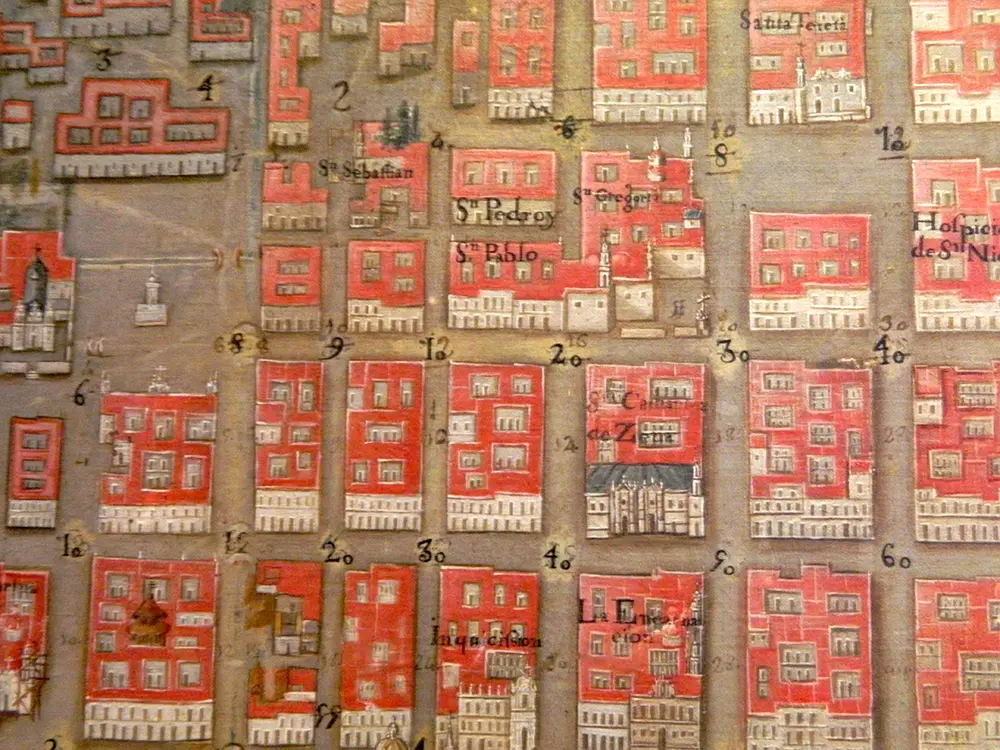
Image: Plano de la ciudad de México, Pedro de Arrieta, 1737. Coordinación Nacional de Museos y Exposiciones, Museo Nacional de Historia Castillo de Chapultepec, Instituto Nacional de Antropología e Historia. The detail of the map of the city of Mexico shows the school (colegio) of San Gregorio, one of the spaces that opened exclusively for Indigenous peoples in the sixteenth century where they had access to higher education.
Imperial Unsettling: Indigenous and Immigrant Activism Toward Collective Liberation
Kevin Escudero
Associate Professor of American Studies and Ethnic Studies, Brown University
Kevin Escudero is associate professor of American studies and ethnic studies and affiliated faculty in Native American and Indigenous studies at Brown University. His research focuses on comparative ethnic studies, Indigenous studies, immigration, social movements, and law. His first book, Organizing While Undocumented (NYU Press, 2020), examined Asian and Latinx undocumented immigrant youth’s cultivation and use of an intersectional movement identity as part of their broader coalition-building efforts. Escudero is also coeditor of UndocuAsians (Rutgers University Press, 2026). During his year at the National Humanities Center, Escudero will be working on his second book project, tentatively titled Imperial Unsettling: Indigenous and Immigrant Activism Toward Collective Liberation. The manuscript extends his previous research on immigrant political activism and places it in conversation with Indigenous movements for self-determination, particularly in the context of US imperialism and militarism in Guåhan (Guam).
NHC: What was the initial spark that led you to this project? What are the big questions that you are considering?
KE: After finishing my first book, Organizing While Undocumented, I developed an interest in the relationship between immigrant political activism and Indigenous movements for self-determination. This interest emerged partially from an interview I conducted with an undocumented Filipina organizer who shared her reflections on the US colonization of the Philippines and what it meant to be an undocumented immigrant in a nation with its origins in Indigenous dispossession. Moreover, as the son of a Vietnamese/Cambodian refugee mother and Bolivian immigrant father, whose family was resettled in the US via circuits of US imperialism and militarism in the Philippines and Guåhan, I sought to understand the ways immigrant and refugee communities could advocate for their liberation in coalition with Indigenous peoples exercising self-determination.
NHC: In the course of your research, have you run across anything that genuinely surprised you? What can you tell us about it?
KE: A pleasant surprise as part of my research has been the opportunity to immerse myself in scholarship from Native American and Indigenous studies as well as Native Pacific studies. Since graduate school, it has been rare that I have had time to devote to sustained reading in a new area, but this project has ensured that I prioritize doing so. This has entailed developing new seminar courses such as “Native Pacific Islander Movements for Self-Determination” (undergraduate) and “Diaspora and Indigeneity” (graduate); enrolling in a summer course in the CHamoru Studies Program at the University of Guam; and participating in a yearlong, community-engaged research fellowship at the Guam Museum. I am indebted to my colleagues in these fields and the community partner organizations in Guåhan who have supported my ongoing learning in these areas.
NHC: What new avenues of inquiry do you hope this research will prompt or make possible in your field?
KE: Some members of Guåhan’s Asian immigrant communities have expressed solidarity with CHamorus, the island’s Indigenous people, as they exercise their right to Indigenous self-determination (e.g., see the work of Vivian Dames, Vicente Diaz, Tabitha Espina, Kristin Oberiano, and Josephine Ong). Given my training in comparative ethnic studies and legal studies, I approach this topic through an analysis of the avenues available under the US legal system for Indigenous self-determination, and how CHamoru and Asian settler activists are contesting these imperial legal logics when envisioning their collective liberation. I hope this research contributes to academic inquiry and activist praxis on US imperialism and Indigenous activism in the US–Canadian and Mexican borderlands, Asian settler colonialism in Oceania, and Indigenous migration and diasporas.
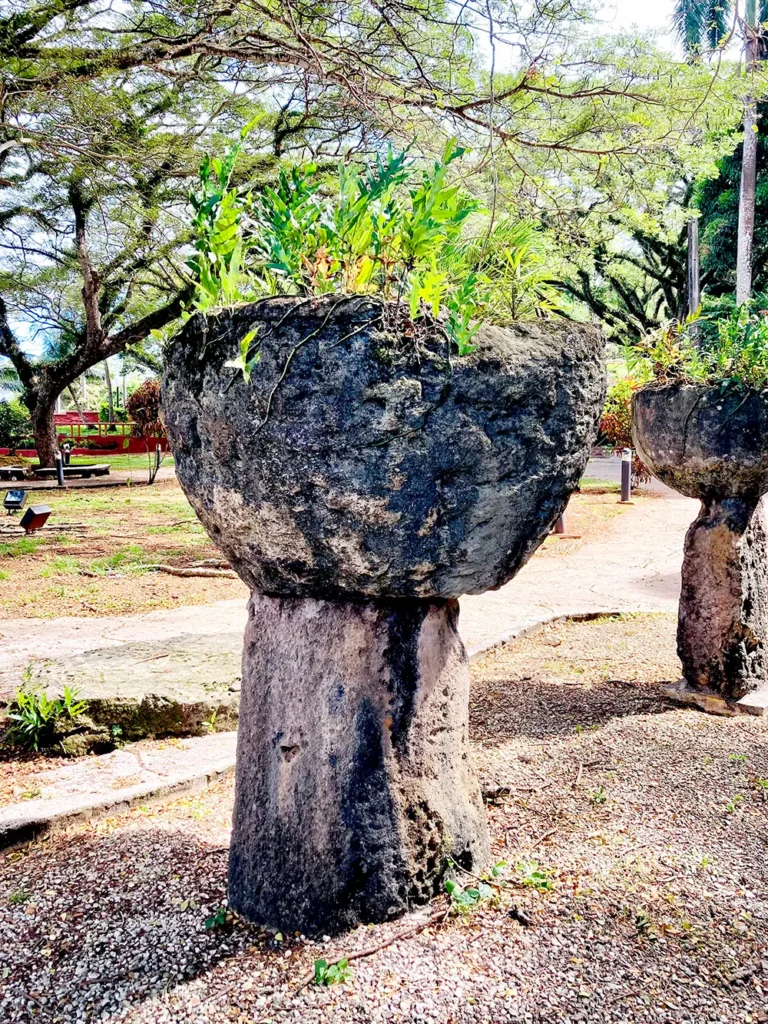
Image: Latte stones at the Senator Angel Leon Guerrero Santos Latte Stone Memorial Park in Hagåtña, Guam. Photo by Kevin Escudero.
The Republic of Laughter: Television and the Affective Archives of Postcolonial Nigeria
Olabode Ibironke
Associate Professor of English and African Studies, Rutgers University–New Brunswick
Olabode Ibironke is associate professor of English at Rutgers University–New Brunswick, where he is director of the Center for African Studies. He received his PhD in postcolonial and diaspora literatures from Michigan State University after earning his BA from Obafemi Awolowo University, Nigeria, and has taught at Obafemi Awolowo University, Michigan State University, the University of Minnesota, and Johns Hopkins University. He is the author of Remapping African Literature (Palgrave Macmillan), and his scholarship has appeared in leading journals including PMLA, The Journal of Commonwealth Literature, and History Compass. He is a two-time recipient of the Andrew W. Mellon Fellowship and a 2024–25 US Fulbright Scholar in Nigeria. Ibironke’s current book examines the history of popular comedy in Nigeria, tracing the relationship between performance, television, and everyday life to show how humor became a central medium through which ordinary people interpreted political change, negotiated modernity, and imagined community.
NHC: What was the initial spark that led you to this project? What are the big questions that you are considering?
OI: I grew up in Nigeria watching television comedians such as Moses Olaiya, whose performances were among the most recognizable features of my generation’s cultural world. Yet as these performers began to pass away, I became increasingly aware that an entire history of Nigerian television culture was disappearing with the generation that made and experienced it. The disparity between their enormous place in popular memory and their near absence from scholarship gave the project an urgency, but it also raised a more personal question: What did these television comedies do to the generations that grew up watching them? From this personal question emerge the book’s larger humanistic questions: How do technologies of mass culture constitute audiences and subjectivities? What happens to an Indigenous performance form as it migrates across media?
NHC: In the course of your research, have you run across anything that genuinely surprised you? What can you tell us about it?
OI: I encountered stories of important recordings and documents discarded or destroyed because those possessing them had little sense of their historical value. This problem became painfully concrete in my work with surviving television materials, including recordings held within the Nigerian Television Authority. I encountered tapes whose survival had depended largely on accident and individual custodianship. More surprising was discovering comparable indifference at the institutional level. I came to understand that archives disappear through countless acts of disposal, neglect, institutional inaction, and, as a consequence, failures of cultural valuation. There is also a striking paradox between the enormous popular presence these works once enjoyed and their extraordinary archival precarity today.
NHC: What new avenues of inquiry do you hope this research will prompt or make possible in your field?
OI: One hope of this project is therefore that the rich interpretative potential offered by these works can itself become an argument for preservation. By demonstrating the aesthetic complexity, historical importance, and formative cultural work of Indigenous popular forms too often treated as ephemeral entertainment, the book seeks to contribute to a renewed recognition of their value as part of Nigeria’s cultural history. The project ultimately asks not only what these cultural forms can tell us about the societies that produced them, but what is lost when a society fails to preserve the forms through which generations learned to imagine themselves.
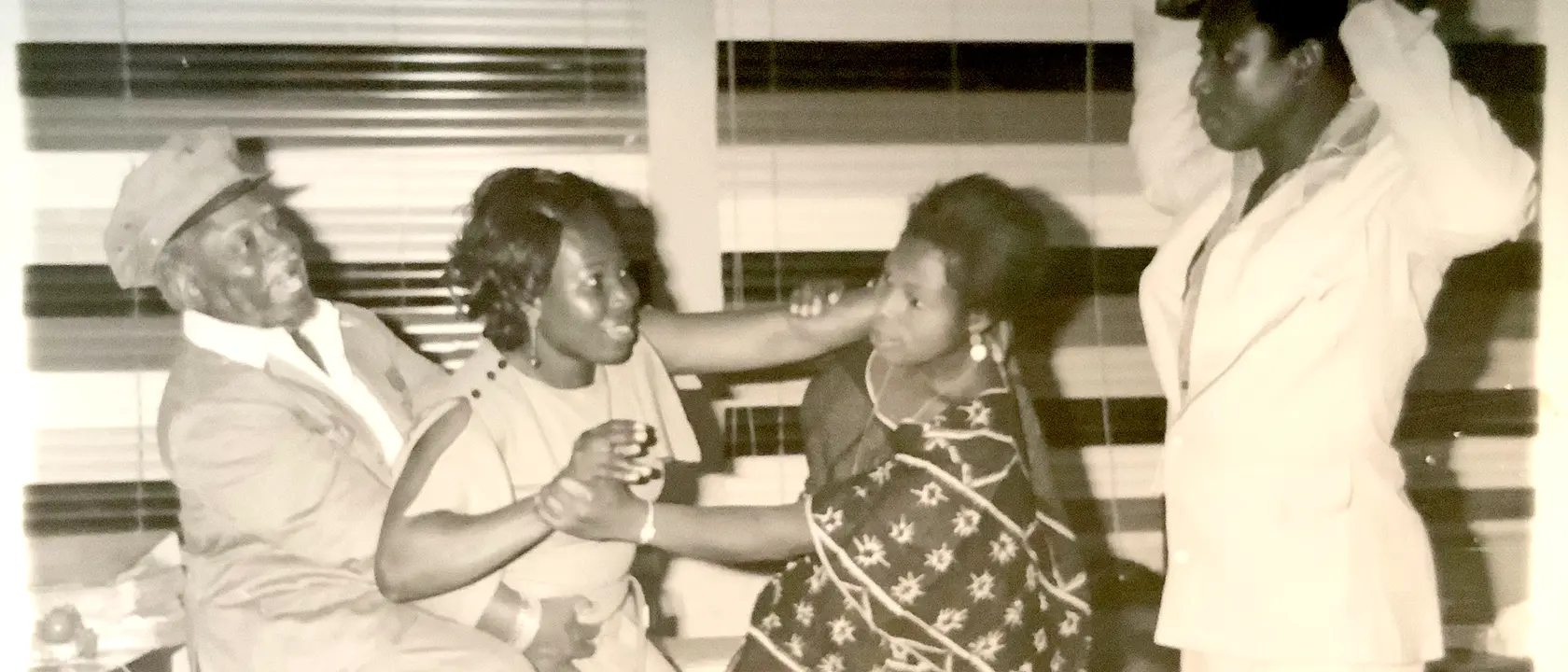
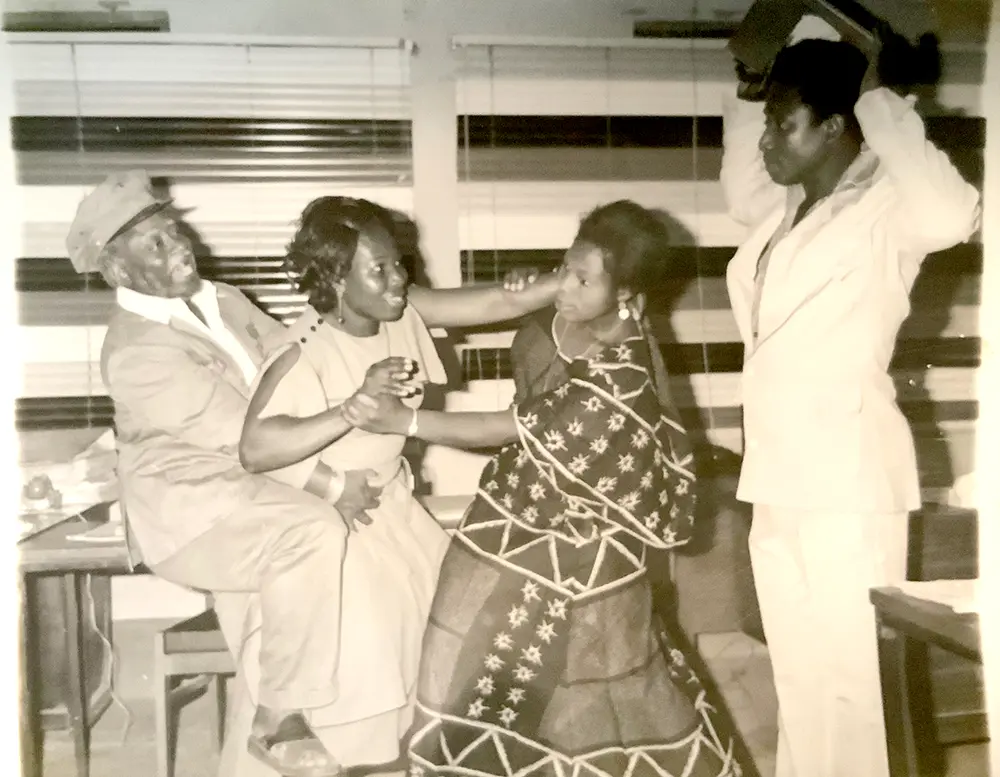
Image: Exclamatory drama in Nigerian televisual comedy. Illustrating the heightened gesture and bodily expression of àwàdà; transforming moments of conflict and revelation into comic spectacle. Photograph courtesy of the Adejumo family archive.
Share this page
Learn More
Featured Research
Points of View
Oct 1, 2026
This month we showcase Fellows examining how different perspectives spur creativity, reveal hidden histories, and connect realms of thought in unexpected ways.
Featured Research
HBCU Scholars
Aug 5, 2026
Highlighting the research of Fellows who are part of the Center’s ongoing initiative to support scholars from Historically Black Colleges and Universities.