
Research Spotlight
Representation and Resistance
Complicated dimensions of political affiliation, organization, and resistance are created from intersections of ideology, imagination, and enduring commitment.
Featured Projects
Emine Hande Tuna
Imaginative Resistance
Ronald Williams II
Black Embassy: TransAfrica and the Struggle for Foreign Policy Justice
Neo-Nazis in Germany and the United States: An Entangled History of Hate, 1945–2000
Michelle Lynn Kahn
Associate Professor of Modern European History, University of Richmond
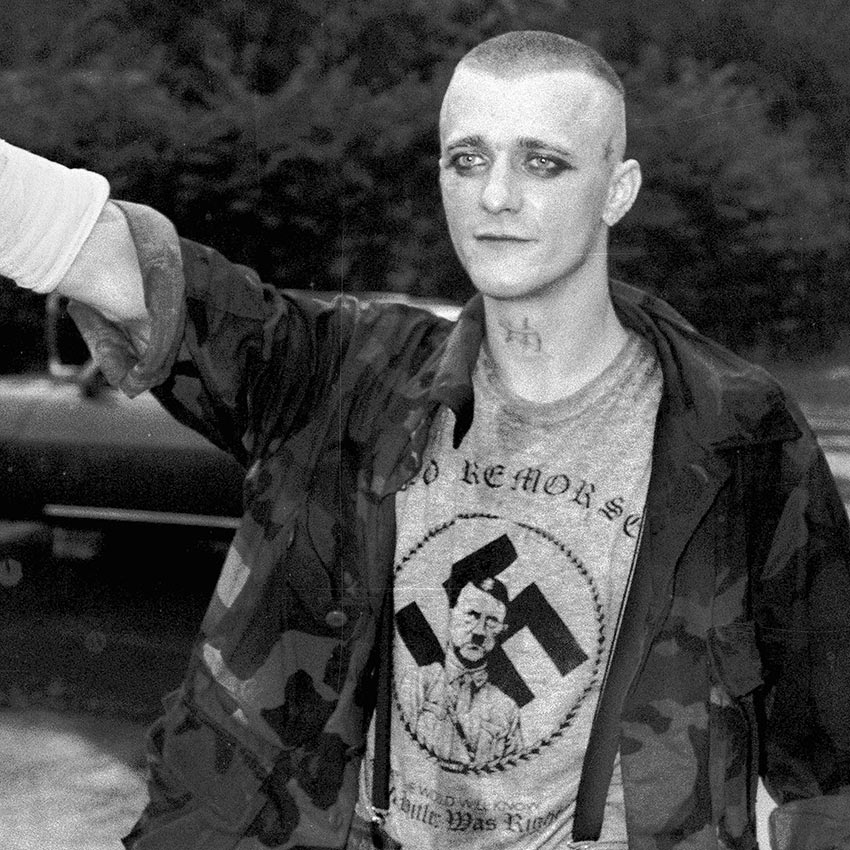
Michelle Lynn Kahn is an associate professor of modern European history at the University of Richmond. She is a scholar of the global and transnational history of Germany after 1945, with expertise in far-right extremism, migration, racism, gender, and sexuality. She currently researches the transnational far-right and is writing a book tentatively titled Neo-Nazis in Germany and the United States: An Entangled History of Hate, 1945–2000. This book investigates the deep, dark web of transatlantic connections between German and American neo-Nazis, Holocaust deniers, and white supremacists from the end of World War II in 1945 through the rise of the internet era in the 1990s.
NHC: What was the initial spark that led you to this project? What are the big questions you are considering?
MLK: When I began researching German neo-Nazism, I did not expect this to transform into a transatlantic project. That changed when I moved to Richmond, Virginia, in 2018. Suddenly, I was confronted with the legacy of the Civil War, slavery, and Jim Crow. The deadly “Unite the Right Rally” in Charlottesville took place an hour from my house, and debates about removing Confederate statues raged on. Beyond Richmond, the 2018 synagogue shooting in Pittsburgh was mirrored by the 2019 synagogue shooting in Germany. Unable to escape the urgency of our moment, I wondered whether German and American far-right movements were historically connected. What kinds of transatlantic far-right networks have existed? Who knew whom? How did they collaborate to spread hate across borders? And what does this mean for the policing of far-right extremism today?
NHC: In the course of your research, have you run across anything that genuinely surprised you? What can you tell us about it?
MLK: I am fascinated by the seemingly curious phenomenon of “gay neo-Nazis.” Considering the persecution of gay men during the Third Reich, one might expect that homosexuality would be completely antithetical to neo-Nazism. However, West Germany’s most prominent neo-Nazi in the 1970s and 1980s was gay and died of AIDS, and there was an American neo-Nazi organization exclusively intended for gay men. These examples, among many others, led me to research the responses of leftwing gay activists, who worried that being associated with far-right extremism would impede the gay rights movement. Overall, my research on queer fascism reminds us of the heterogeneity of ideologies and identities within far-right movements and reinforces historian Laurie Marhoefer’s important point that “there are various flavors of queer politics.”
NHC: What new avenues of inquiry do you hope this research will prompt or make possible in your field?
MLK: I hope to encourage more research on the global interconnectedness of the far right in the past and present. Scholars have typically approached the far right from a national or comparative perspective, inadvertently portraying them as distinct cases. A global framework invites (and may even require) scholarly collaboration. Because we each have varying geographic specializations and language skills, we can collectively tackle this global question from multiple national and regional contexts. For example, studying the transatlantic far-right as a Germanist has connected me with wonderful Americanist colleagues. I also hope to encourage transnational collaboration among scholars, activists, journalists, watchdog groups, and deradicalization organizations. Our scholarship can make a significant public impact if it is concretely applied.
Reflecting the transatlantic nature of neo-Nazism, a German neo-Nazi wears a t-shirt that says, in English, “No remorse… The world will know Hitler was right.” The photo was taken in 1987. Copyright: © picture alliance / dpa
Imaginative Resistance
Emine Hande Tuna
Assistant Professor of Philosophy, University of California, Santa Cruz
Emine Hande Tuna is an assistant professor of philosophy at University of California, Santa Cruz, where she writes and teaches about imagination, aesthetics, and why some stories just won’t sit right with us. Her current project offers a new account of imaginative resistance, combining historical insights from Kant and Hume with contemporary philosophy and psychology. It examines how emotions like disgust and contempt shape our imaginative engagement, why some fictional worlds feel impossible to enter, and what this reveals about the nature of imagination—whether there are standards of success for imagining, what it means to fail at it, and how bias shapes the limits of our imaginative lives.
NHC: What was the initial spark that led you to this project? What are the big questions you are considering?
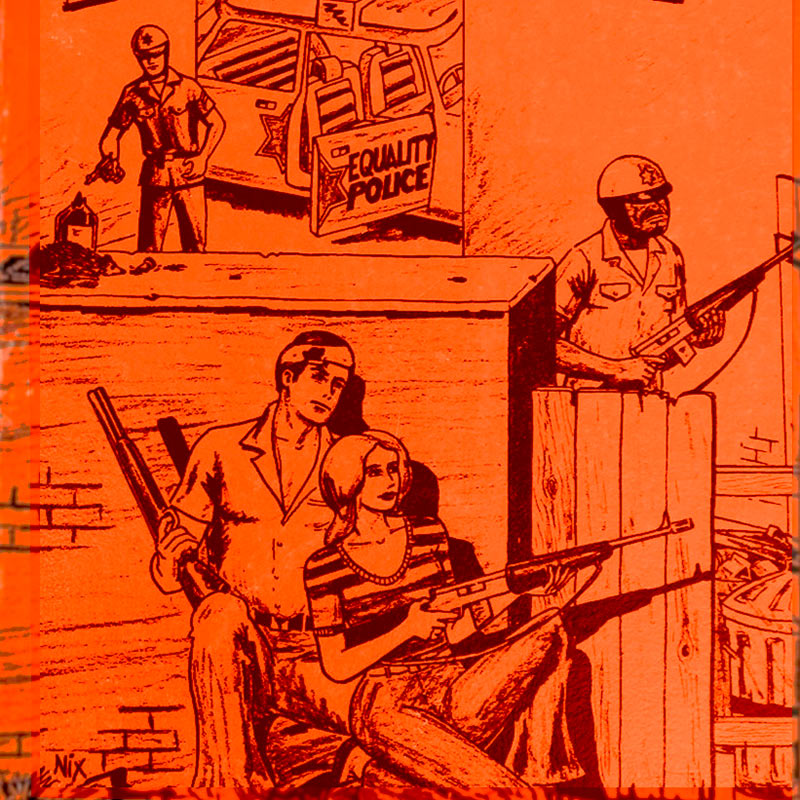
EHT: I was always interested in the ethical criticism of artworks but set it aside as too vast a topic. What drew me back was the problem of imaginative resistance, moments when a story asks us to imagine something we cannot or will not. Think of The Planter’s Northern Bride, which portrays slavery as justified, or The Turner Diaries, which treats the genocide as morally acceptable. This phenomenon gave me a way to enter the ethics and aesthetics debate in a more focused way. Instead of grappling with every instance of ethically charged art, I could study a puzzle: the refusal or failure of imagination. From there my research opened to broader questions. What does it mean to say imagination has limits? Imagination is supposed to be free. What would it mean for imagination to succeed or fail, and what norms of imagining, if any, might exist?
NHC: In the course of your research, have you run across anything that genuinely surprised you? What can you tell us about it?
EHT: My hypothesis has been that resistance reactions are amplified by emotions like disgust and contempt, so I turned to psychological research on these emotions. Some of the findings were quite interesting. Studies show, for example, that people’s moral judgments become harsher when they are exposed to unpleasant smells, when they sit in a dirty room, or even when they drink a bitter beverage. At the same time, disgust isn’t fixed. I was especially surprised by one study showing that mothers rated their own baby’s dirty diapers as less disgusting than another baby’s even when they didn’t know which diaper was which.
NHC: What new avenues of inquiry do you hope this research will prompt or make possible in your field?
EHT: I hope this research prompts philosophers to think more carefully about the success conditions of imagining and the norms of imagining. Sometimes success is about accuracy, as when we imagine whether a couch will fit in a room. But not all imaginative activities aim at accuracy. Depending on what we are doing, whether daydreaming, empathizing, or engaging with fiction, and what our goals are, success may instead depend on whether our imaginings are fitting. I also want to open up discussion about the norms of imagining, what it means to be a good imaginer, and how we might cultivate imagination as a skill. There is already valuable work on these questions, but I hope my research will carry these debates forward and bring new clarity to them.
James Shapiro recently labeled The Turner Diaries “the most dangerous book in America.”
Black Embassy: TransAfrica and the Struggle for Foreign Policy Justice
Ronald Williams II
Independent Scholar, African American Studies
Ronald Williams II is an independent scholar and writer with broad interests in African American and African Diaspora history and politics, and the history of US foreign relations. He was previously a member of the full-time faculty at the University of North Carolina at Chapel Hill where he taught courses on history, politics, and public policy in the Department of African, African American, and Diaspora Studies. His current book project is an institutional history of the African American foreign policy advocacy organization TransAfrica, drawing on extensive archival research and more than 100 original interviews,
NHC: What was the initial spark that led you to this project? What are the big questions you are considering?
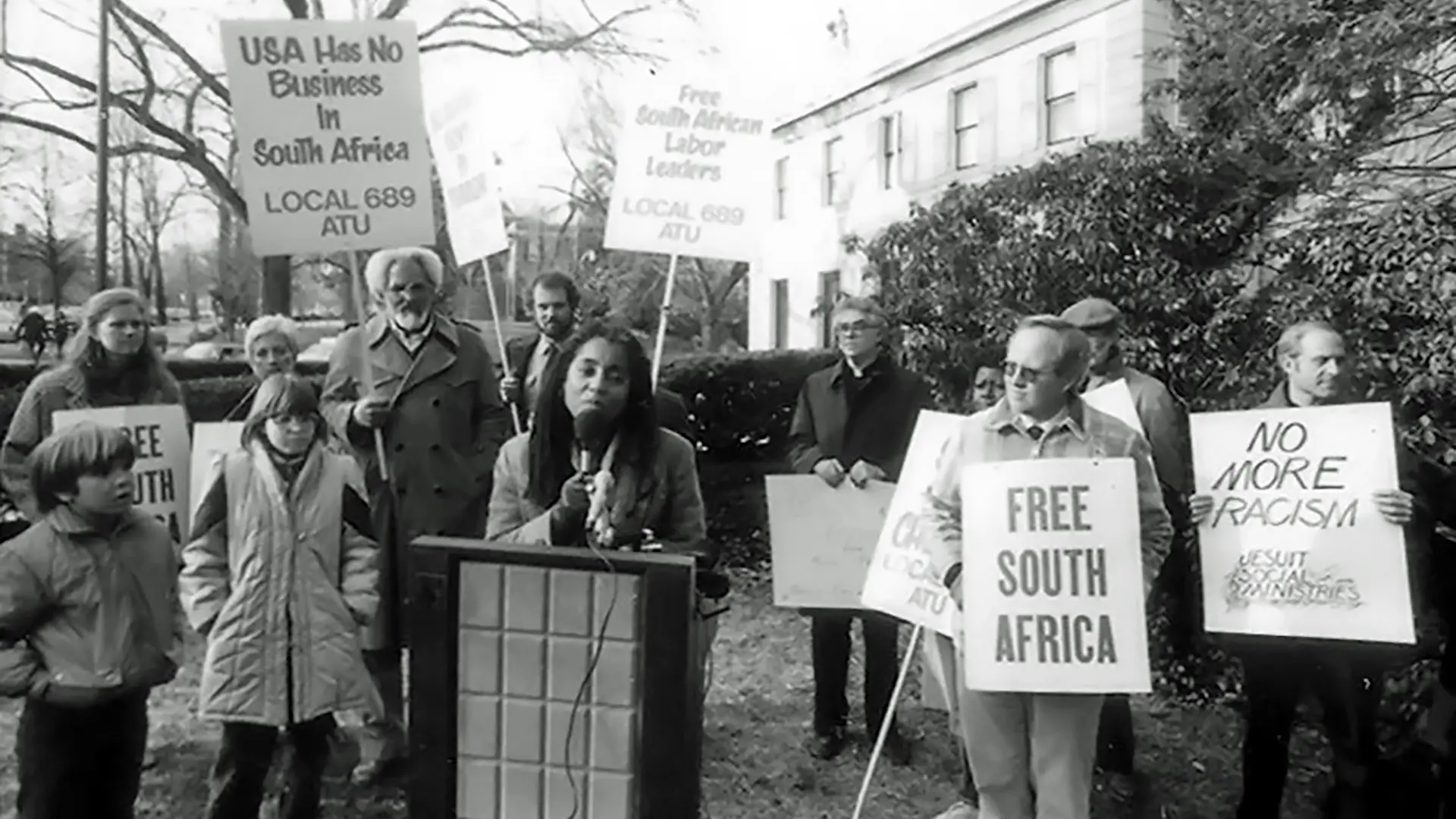
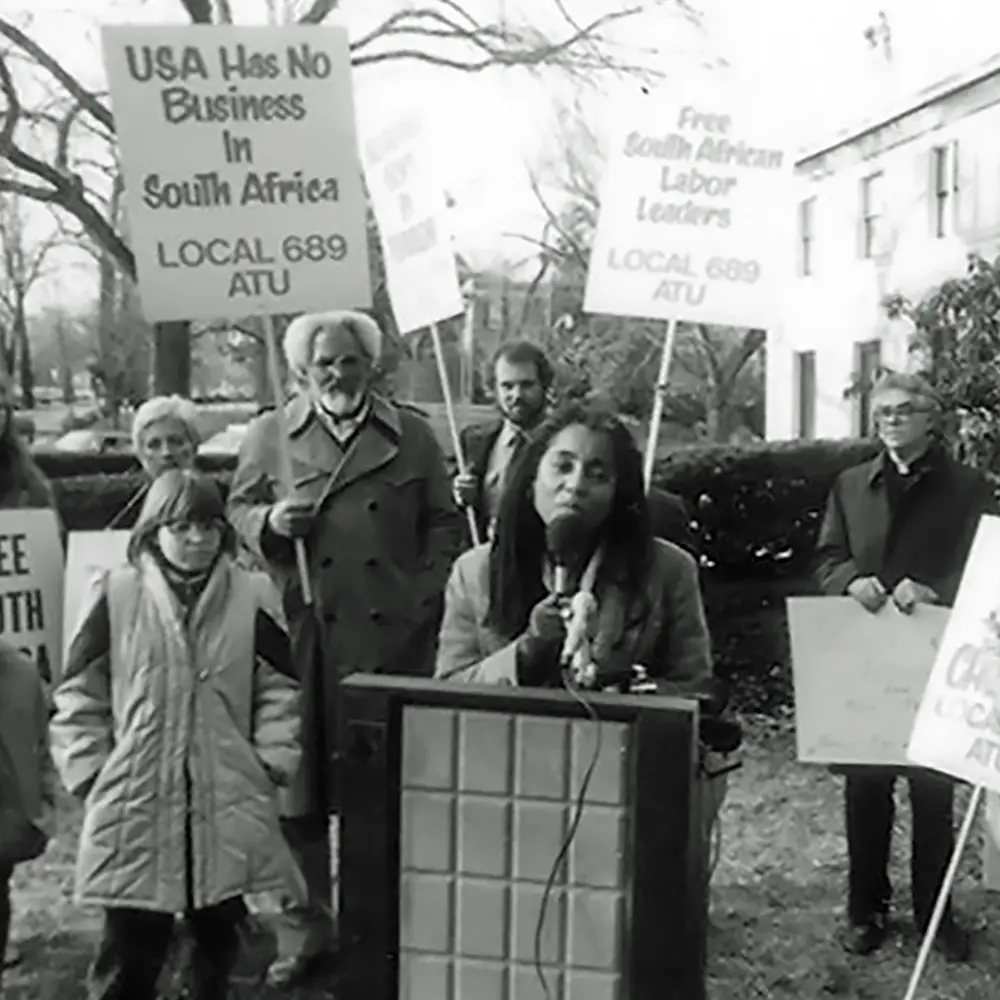
RW: This project began during my Ph.D. at UC Berkeley, where I was encouraged to study TransAfrica, the African American foreign policy advocacy organization co-founded by Randall Robinson. Since then, I have examined how African Americans have engaged U.S. foreign policy toward Africa and the Caribbean from the mid-twentieth century to the present. Founded in 1977, TransAfrica coordinated Black political influence in foreign policy and played a central role in the anti-apartheid movement through the Free South Africa Movement. In the 1990s, it expanded its public focus to issues including Haiti, Rwanda, debt relief, reparations, and Cuba, among others. The project asks what enabled its rise and what limited its long-term influence.
NHC: In the course of your research, have you run across anything that genuinely surprised you? What can you tell us about it?
RW: What surprised me most was how narrow the prevailing understanding of TransAfrica has been. I initially understood it primarily as an anti-apartheid organization, but my research revealed a much broader agenda. Even as South Africa remained central, TransAfrica consistently engaged a wide range of foreign policy concerns over time—work that has been largely overlooked in both public memory and scholarship. This points to an underrecognized dimension of Black political life: sustained efforts to shape U.S. foreign policy beyond moments of peak visibility. My research also revealed how deeply the organization’s development was intertwined with Randall Robinson’s leadership, making the project both an institutional history and an intellectual biography.
NHC: What new avenues of inquiry do you hope this research will prompt or make possible in your field?
RW: I hope this project encourages scholars to take Black politics in the 1980s and 1990s seriously as a period of strategic organizing in its own right, rather than primarily in relation to the civil rights movement. TransAfrica’s history provides one entry point into rethinking that era, while the Free South Africa Movement offers a model of disciplined, sustained organizing anchored in a clear demand for U.S. sanctions against South Africa. Together, they demonstrate how civil disobedience, media visibility, and institutional pressure can work in concert to shape foreign policy. The project also situates Randall Robinson as a major figure in Black political engagement with foreign policy, anticolonialism, and Pan-Africanism, tracing his influence as an organizer, strategist, and public intellectual across several decades.
Sylvia Hill—Free South Africa Movement steering committee member, SNCC veteran, and professor at the University of the District of Columbia—speaks during a protest outside the South African Embassy in Washington, D.C., early 1985.
Share this page
Learn More
Featured Research
Points of View
Oct 1, 2026
This month we showcase Fellows examining how different perspectives spur creativity, reveal hidden histories, and connect realms of thought in unexpected ways.
Featured Research
HBCU Scholars
Aug 5, 2026
Highlighting the research of Fellows who are part of the Center’s ongoing initiative to support scholars from Historically Black Colleges and Universities.