“The Worst Trickster Story Ever Told”: Native America, the Supreme Court, and the US Constitution
Webinar Details
Using the “trickster” story as a lens of analysis, this webinar will explore how plenary power—a doctrine of American law in which the United States bequeathed itself limitless authority over Native American nations and peoples—became constitutional. Unsurprisingly, the plenary power doctrine was originally grounded in the common-held racist ideologies of its day.
What is surprising is that this historic, racist principle of law not only continues to exist but is presently understood to authoritatively emanate from the US Constitution.
So when did plenary power become constitutional? More importantly, why did it become constitutional? In a unique twist on legal and Native history, this webinar will use the genre of trickster stories to uncover the answers to these questions and offer an alternative understanding. By embracing the subtle, winking wisdom of trickster stories and centering the Indigenous perspective, we can open new avenues for understanding this history and imagine a future that is more just, equitable, and that better fulfills the text and the spirit of the Constitution.
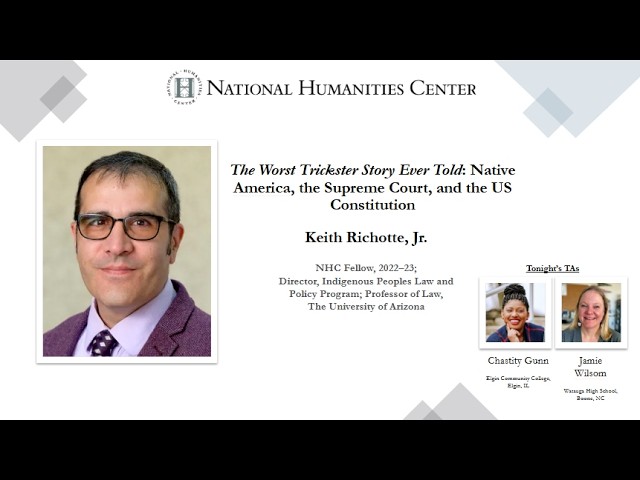
Instructor: Keith Richotte, Jr. (NHC Fellow, 2022–23; Director, Indigenous Peoples Law and Policy Program; Professor of Law, The University of Arizona)
Advisors: Chasity Gunn and Jamie Wilson, NHC Teacher Advisory Council
Share this page