
The Power of Buttons: A Craft Workshop and Public History
St. Louis, Missouri
April 18, 2024
Organizers: Center for the Humanities, Washington University in St. Louis; Arts Educator C.J. Mitchell
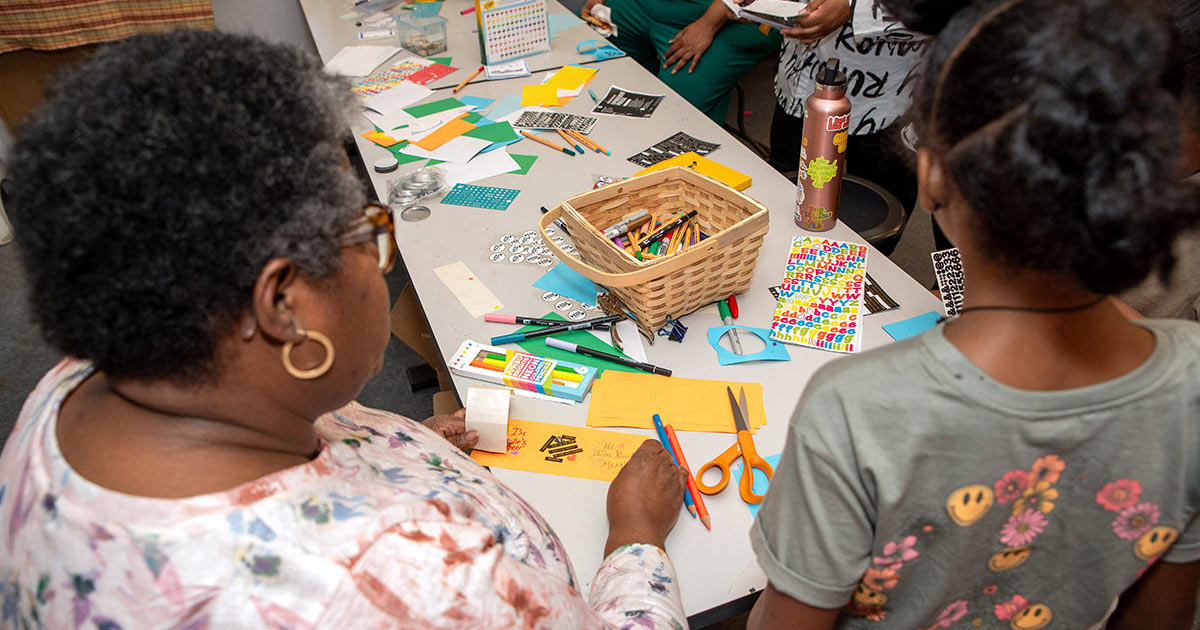
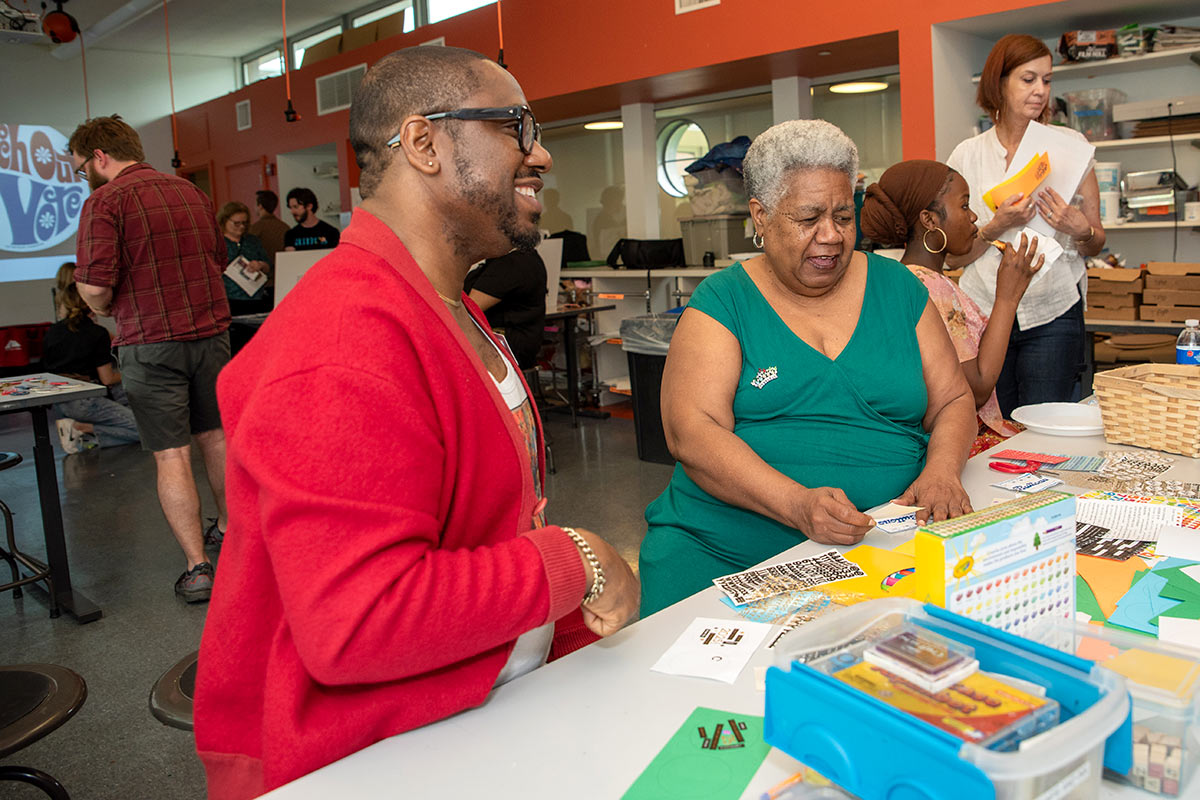
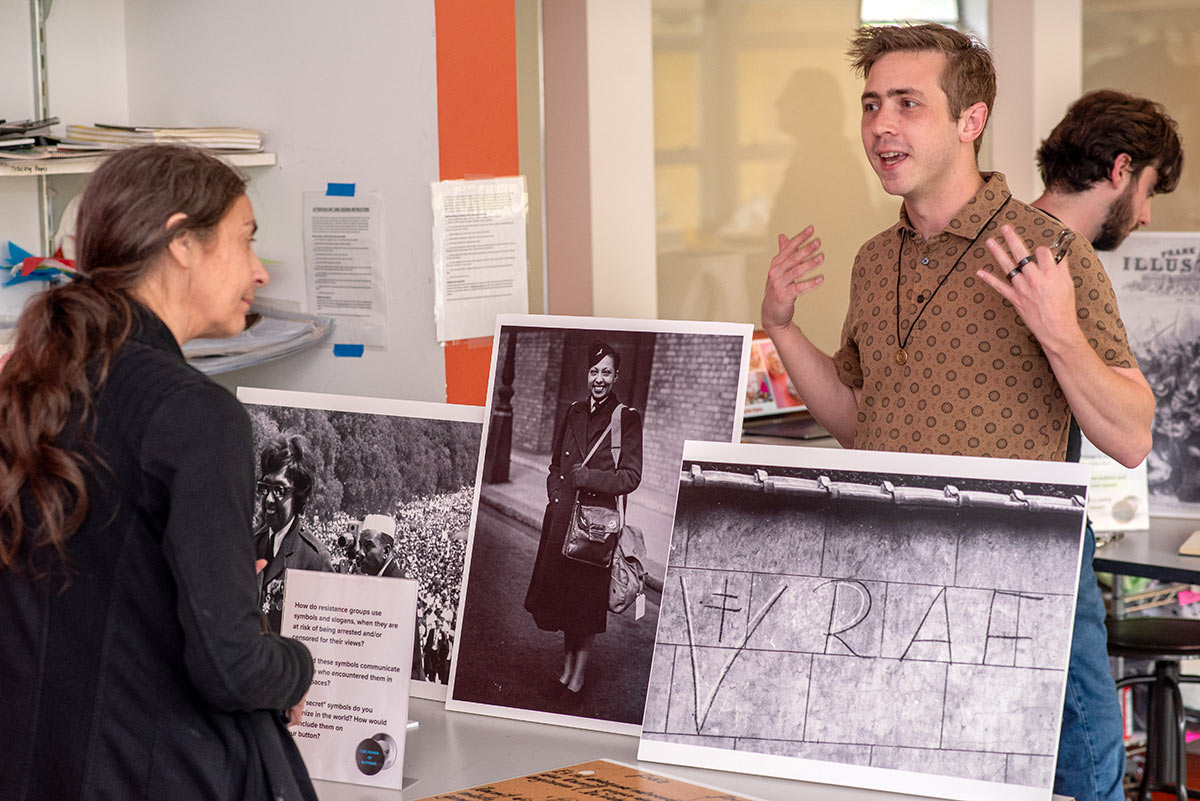
Festival participants of all ages craft buttons together and consider their role in the history of social movements. Photograph by Phillip Hamer.
This pop-up workshop engaged the broader St. Louis community with a small but powerful public text: the pin-back button. By focusing on the long history of the pin-back button, this event sought to prompt more thinking about these wearable, shareable public texts. Buttons are crucial to social movement and organization, but are easily overlooked because of their diminutive and seemingly frivolous nature. As common personal possessions and highly circulated tokens of political or social affiliation, buttons both document and disseminate personal beliefs and preferences.
As organizers described, this festival event combined opportunities to connect with local authors, graduate students, and regional nonprofits on the histories of advocacy and the “methods of advocating for various communities.” Each organization had their own table where they “showcased a particular history of advocacy for justice.”
Our participation in the Being Human Festival really made it possible for us to design a model of public humanities engagement that we plan to use in the future.
–Festival event organizer
Translating my research for the diverse group of participants was simultaneously challenging and rewarding. I learned something from every person who came to my table, whether they were seven or 67.
–Marc Blanc, Festival event collaborator
This workshop helped participants consider the significance of buttons as public texts and persuasive tools with discernible histories that involve social movements, civic engagement, and community building.
At each table, participants were prompted to think about how the histories they were learning about intersected with their own struggles for change in their community. Organizers posted signs with broader questions, such as: “What are the causes that matter most to you?” “How might you organize others to join your cause?” and “How can art inspire social change?”
Our audience’s diversity made for wonderful conversations between tables—topics ranged from local reproductive justice initiatives to histories of strikes in St. Louis—and between our participants, for whom the information sharing was decidedly mutual!
–Festival event organizer
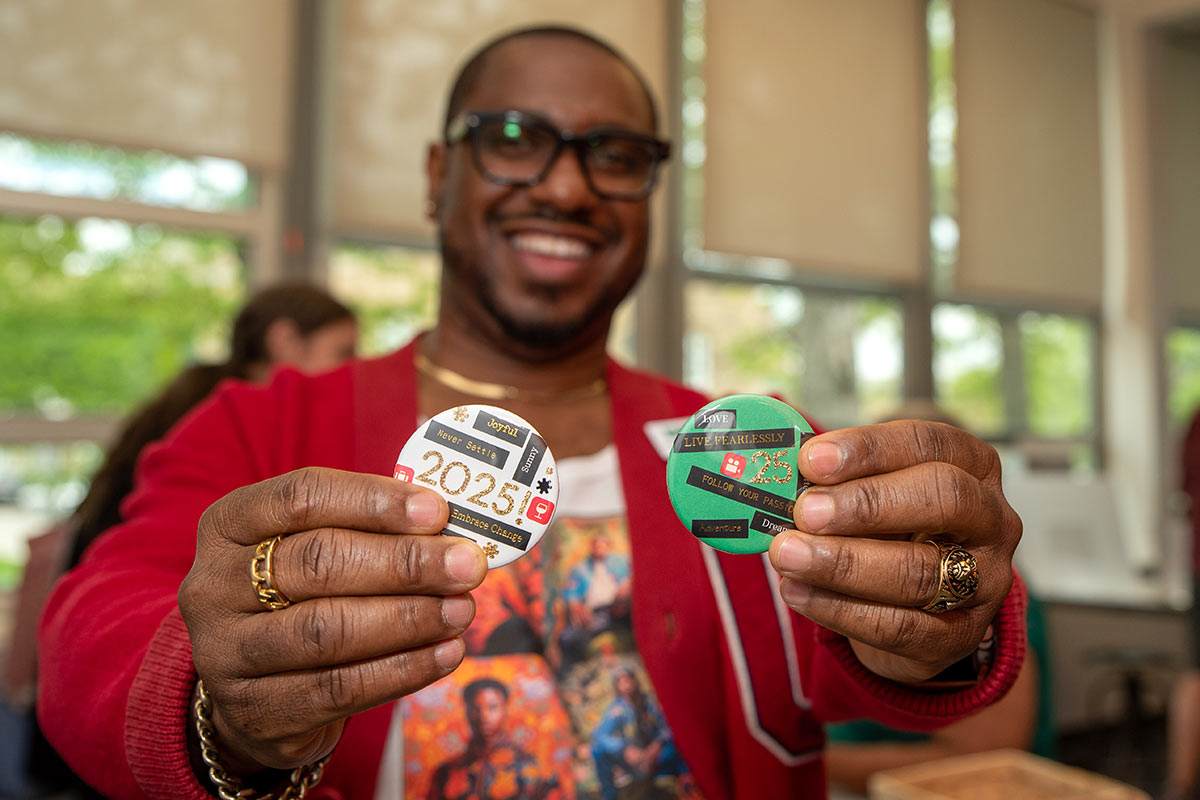
After moving through these tables, learning more about these histories and causes, and having conversations with these specialists, participants made their way to craft tables to produce their own buttons that showcased their own personal interests and causes.
This event was also featured in Washington University in St. Louis’ Center for the Humanities annual report.
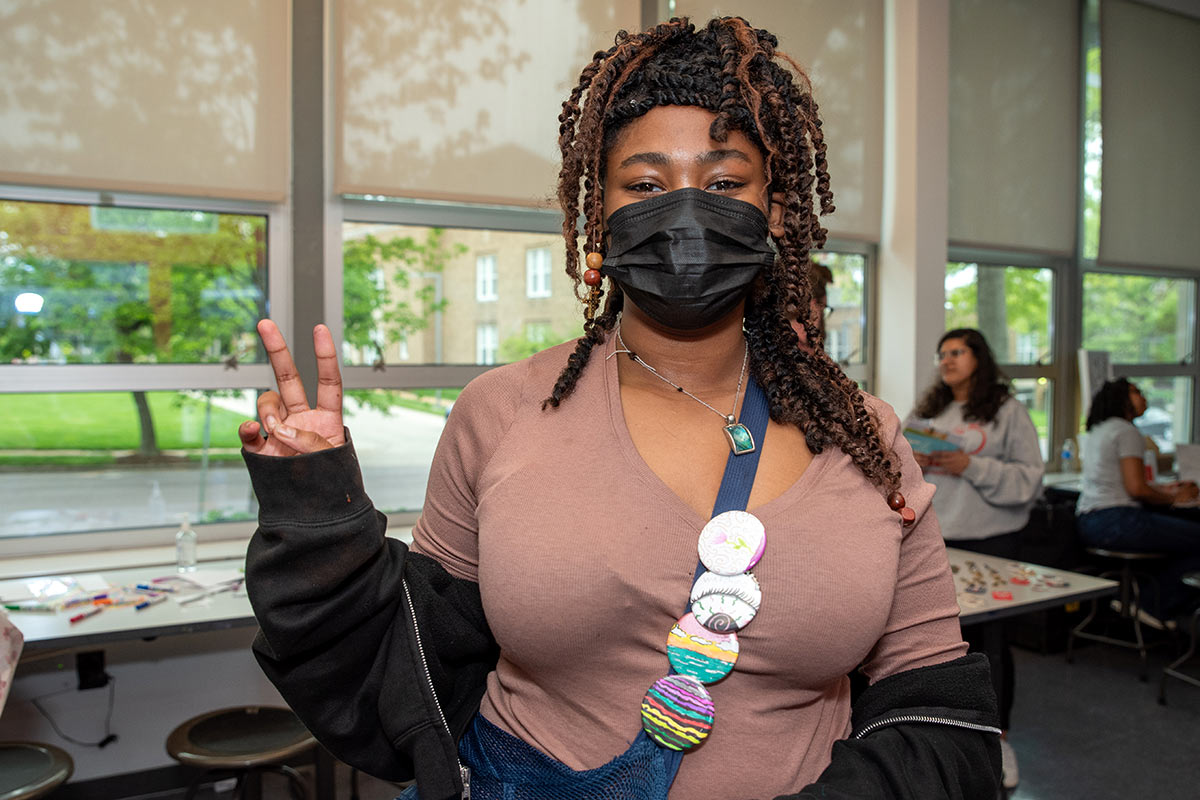
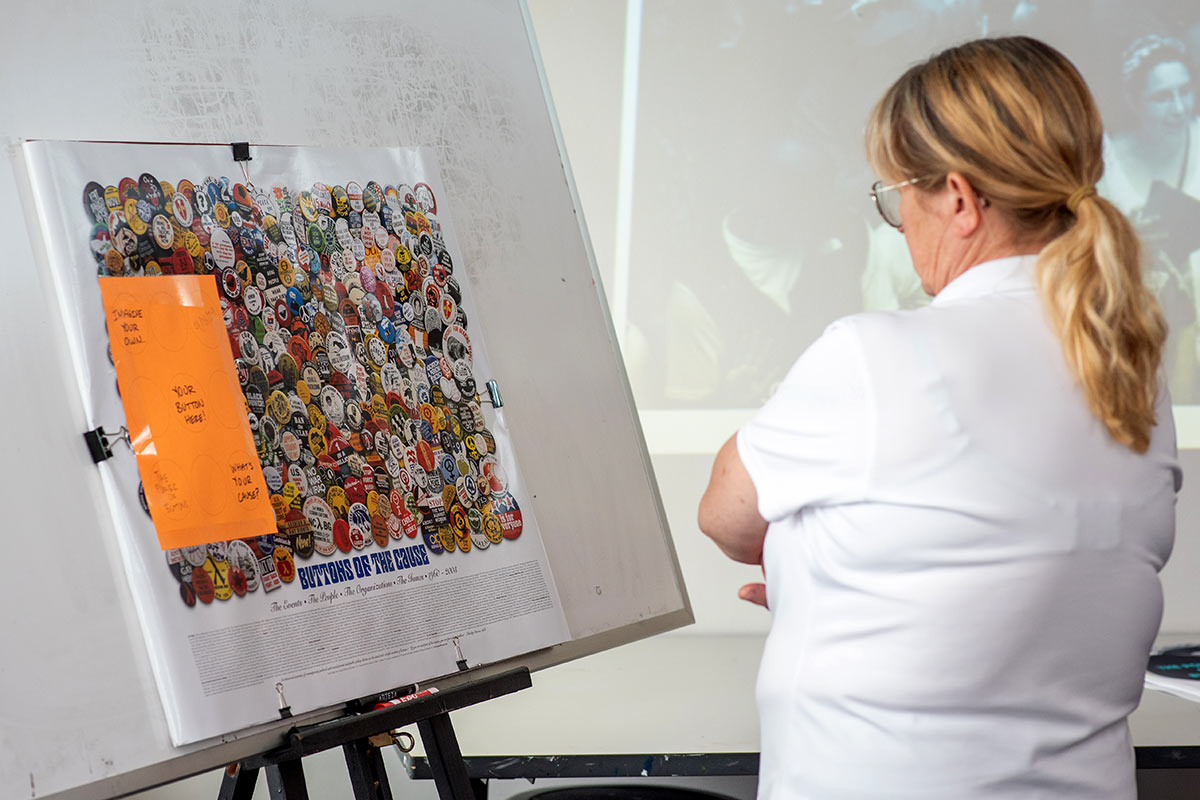
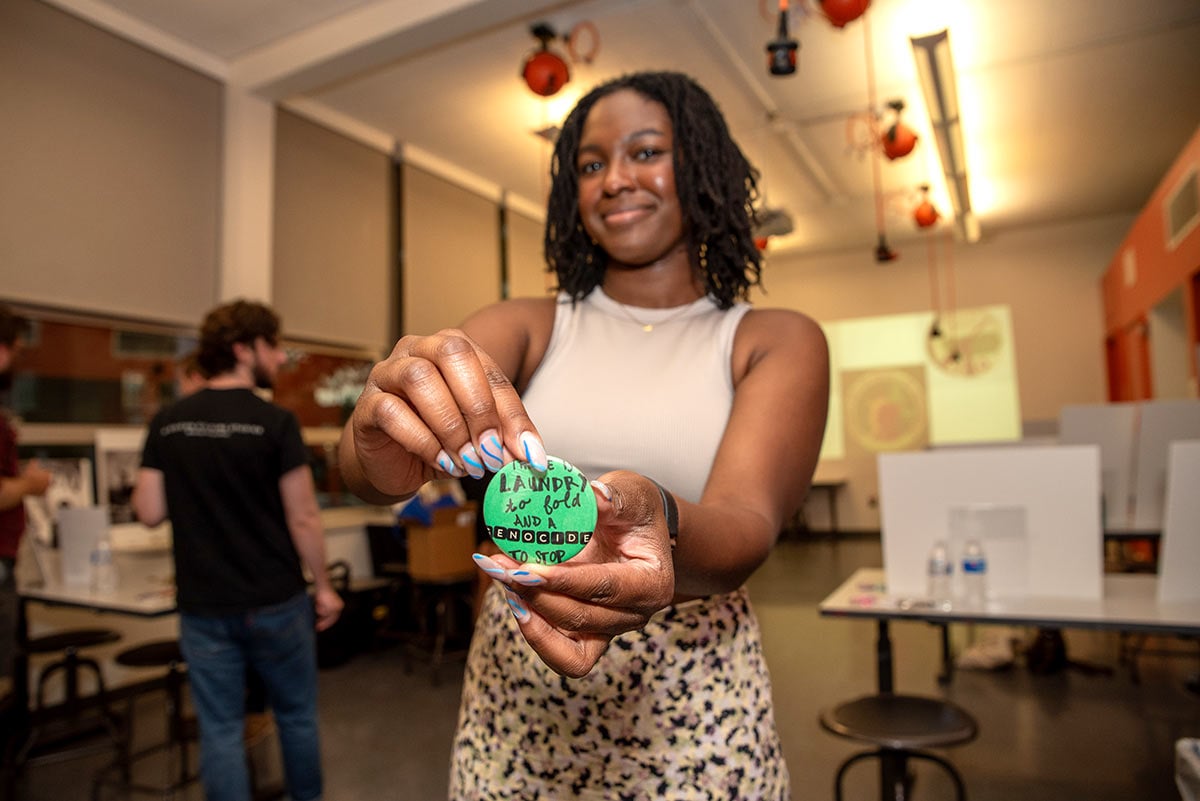
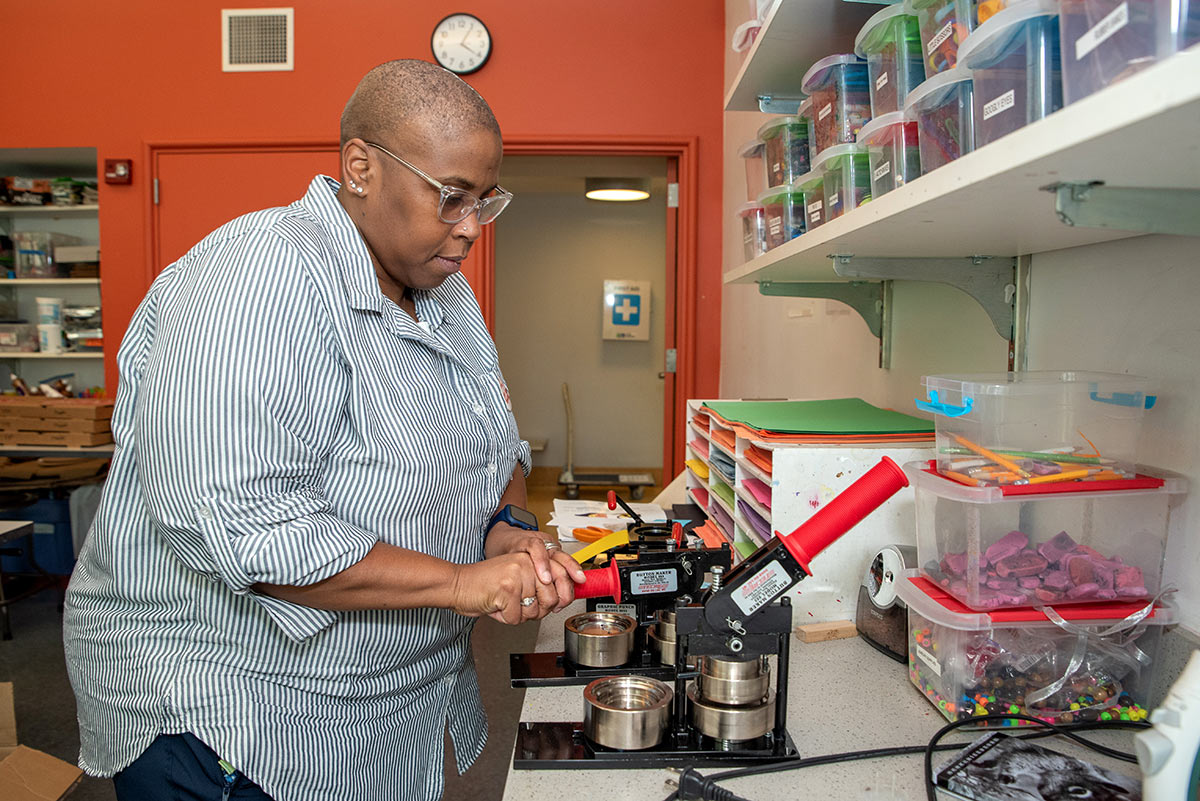
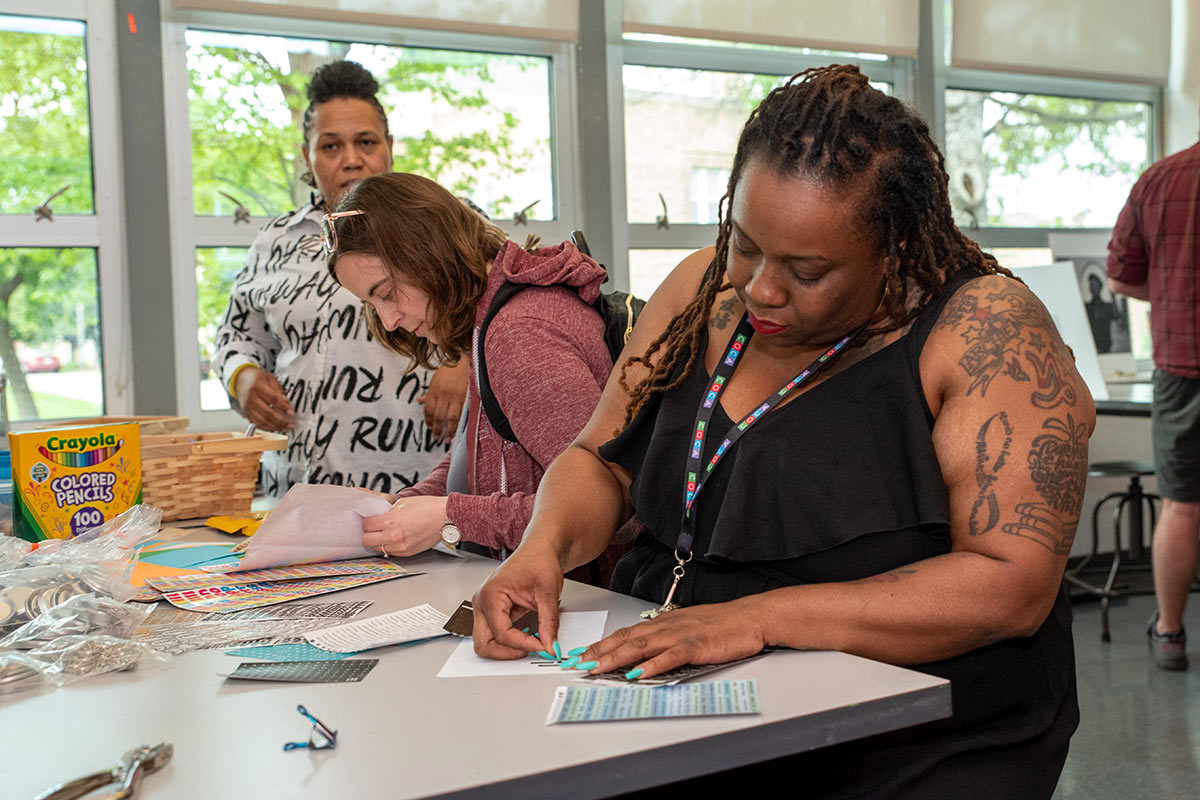
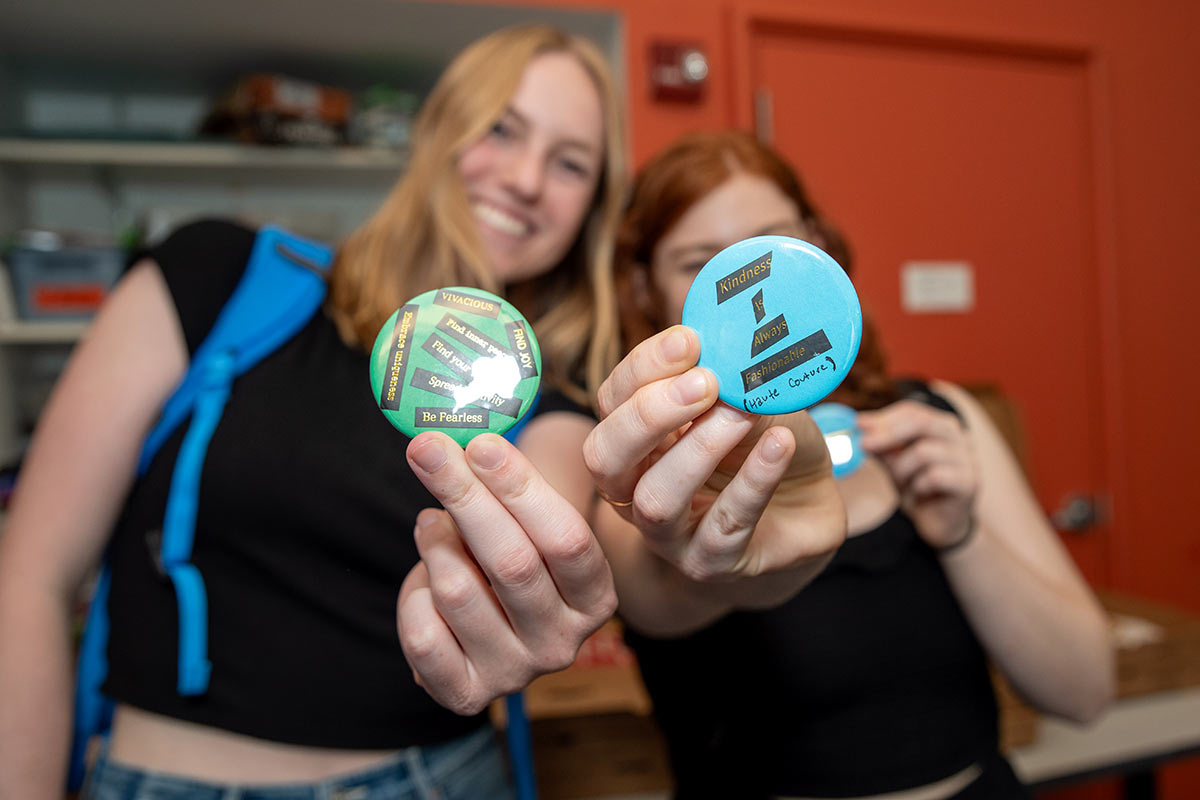
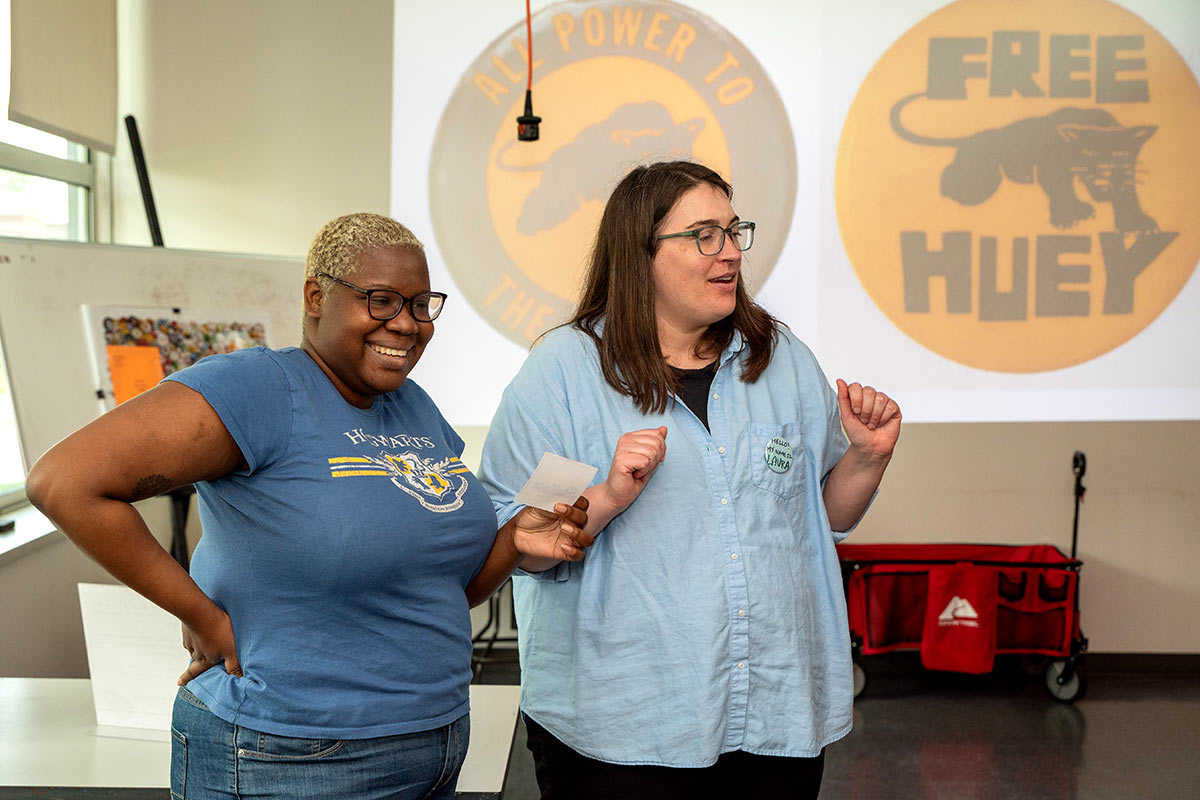
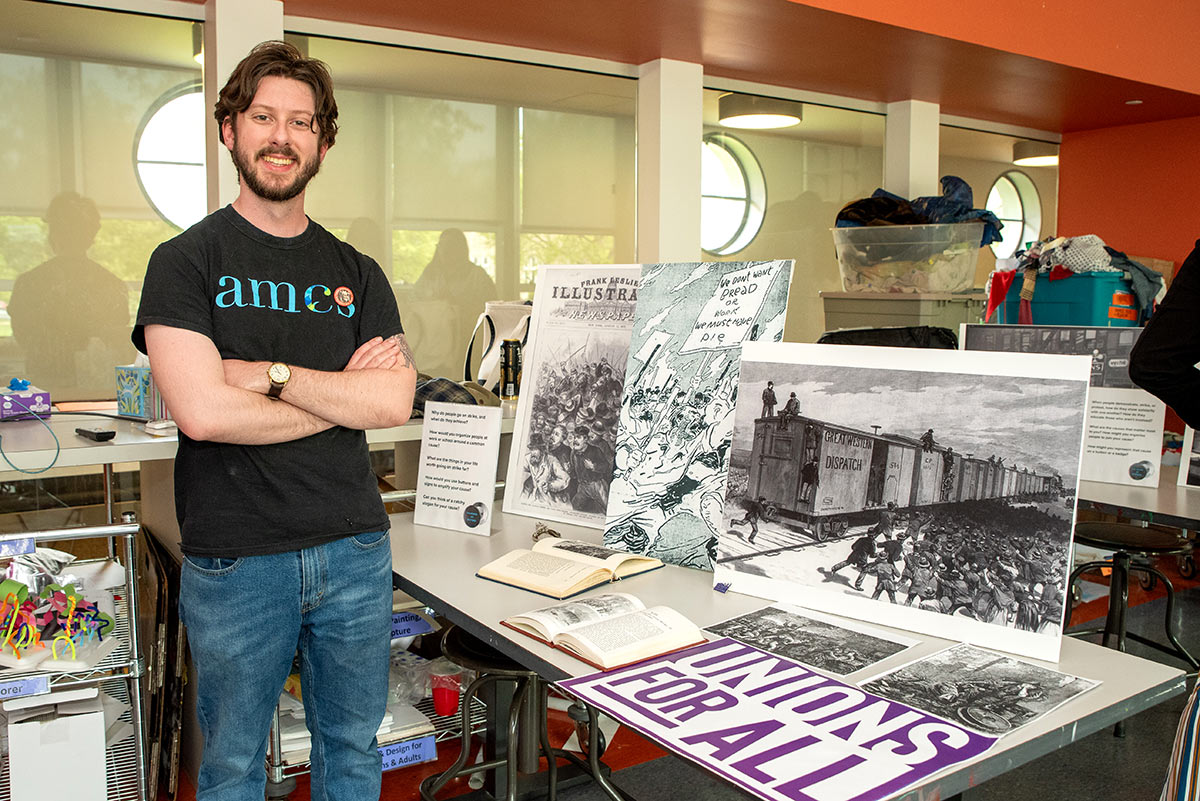
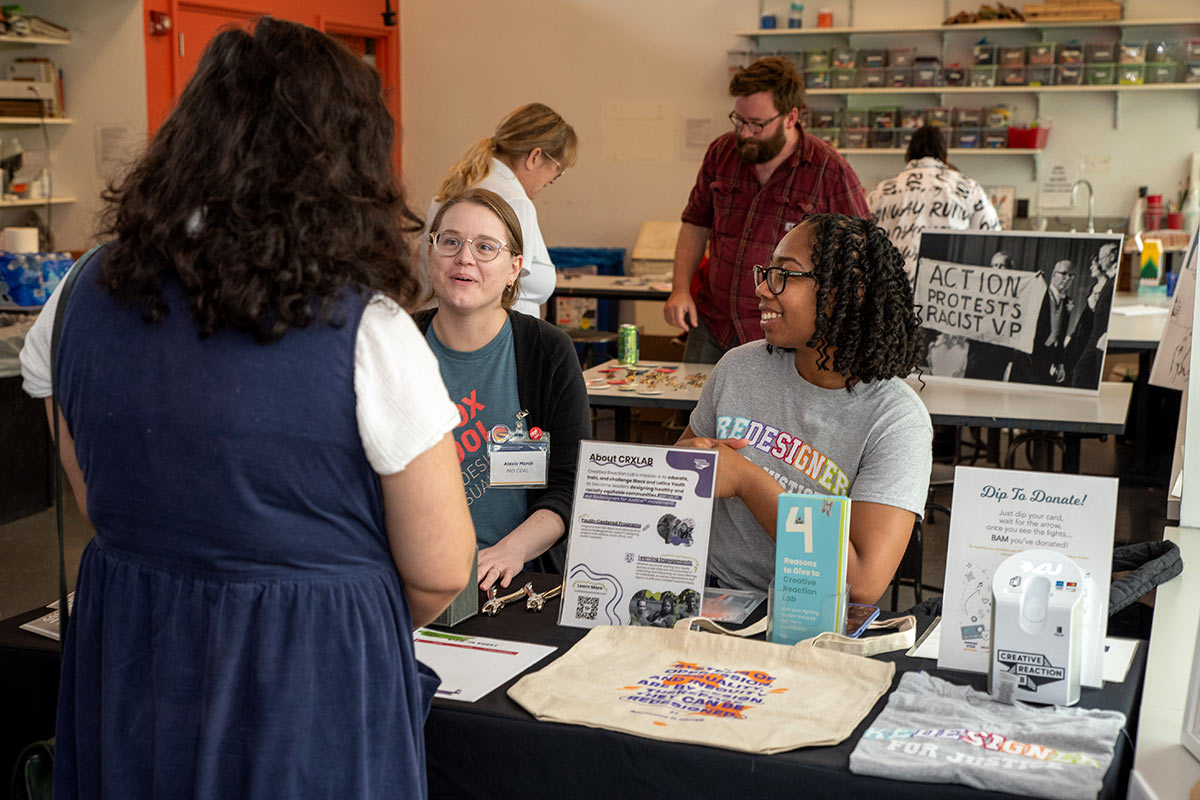
Event organizers grounded this event in history, community, and collaboration. Participants had the opportunity to use the process of button-making to connect the past with the future. Photographs by Phillip Hamer.