
Stories of Detroit’s Crown Jewel: Different Facets of Being Human at Belle Isle Park
Detroit, Michigan
April 24, 2025
Organizers: Wayne State University Humanities Center, Belle Isle Conservancy, and Wayne State University Department of Urban Studies and Planning
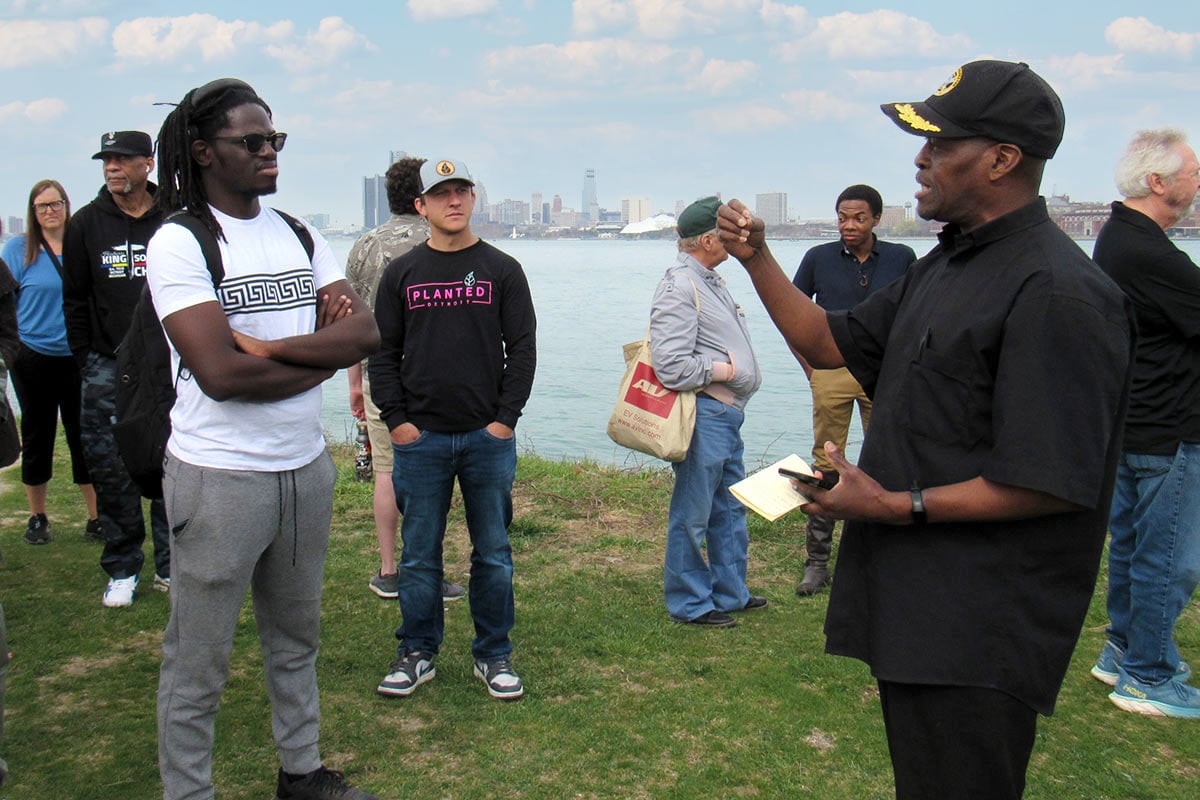
Rev. Barry Randolph shares a story about Sunset Point. Photograph by Victoria Stewart.
A nearly thousand-acre island in the river separating Detroit, Michigan from Windsor, Ontario, Belle Isle Park is one of Detroit’s most beloved landmarks. Over time, the park has grown and adjusted to the perceived needs of not just its citizens, but the nation. Like most parks, its features include extensive landscaping, fountains and statuary, and groves and gardens. Yet Belle Isle has also been home to local and national infrastructure (including water works, a lighthouse, and a Cold War era Nike-Hercules missile site) as well as surprising elements such as a Prohibition-era speakeasy in the aquarium basement.
In blending the cultural and natural, Belle Isle is an important landmark for what it means to be human. This event’s guided tour of Belle Isle doubles as a community storytelling venture, eliciting the multifaceted history of this landmark from local scholars and residents alike.
As a first event of this type, and Wayne State University Humanities Center’s third public program ever, this event can be considered both a success and a fruitful step toward our increased focus on public humanities programming.
—Victoria Stewart, Festival event organizer
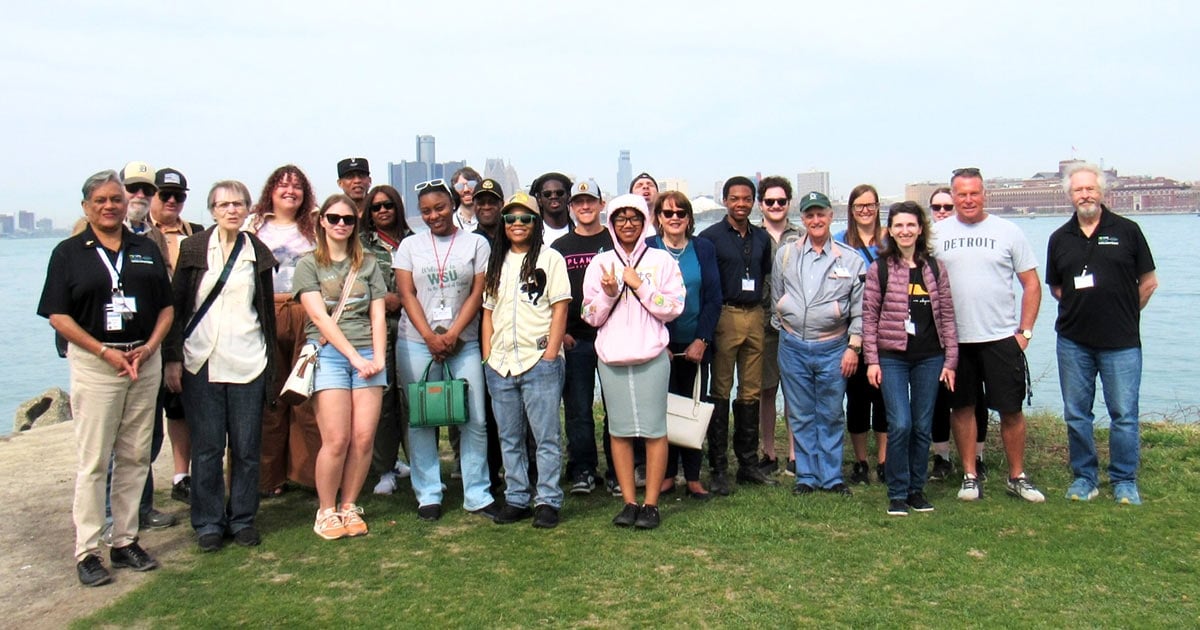
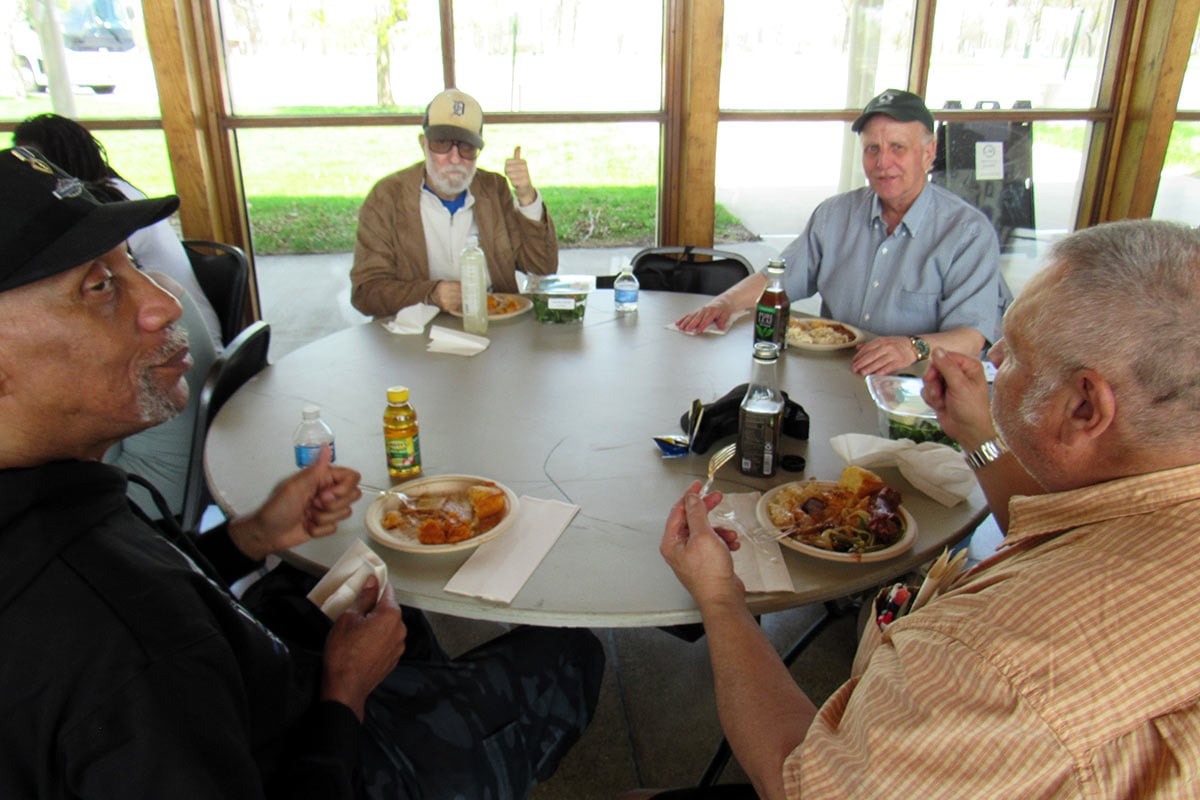
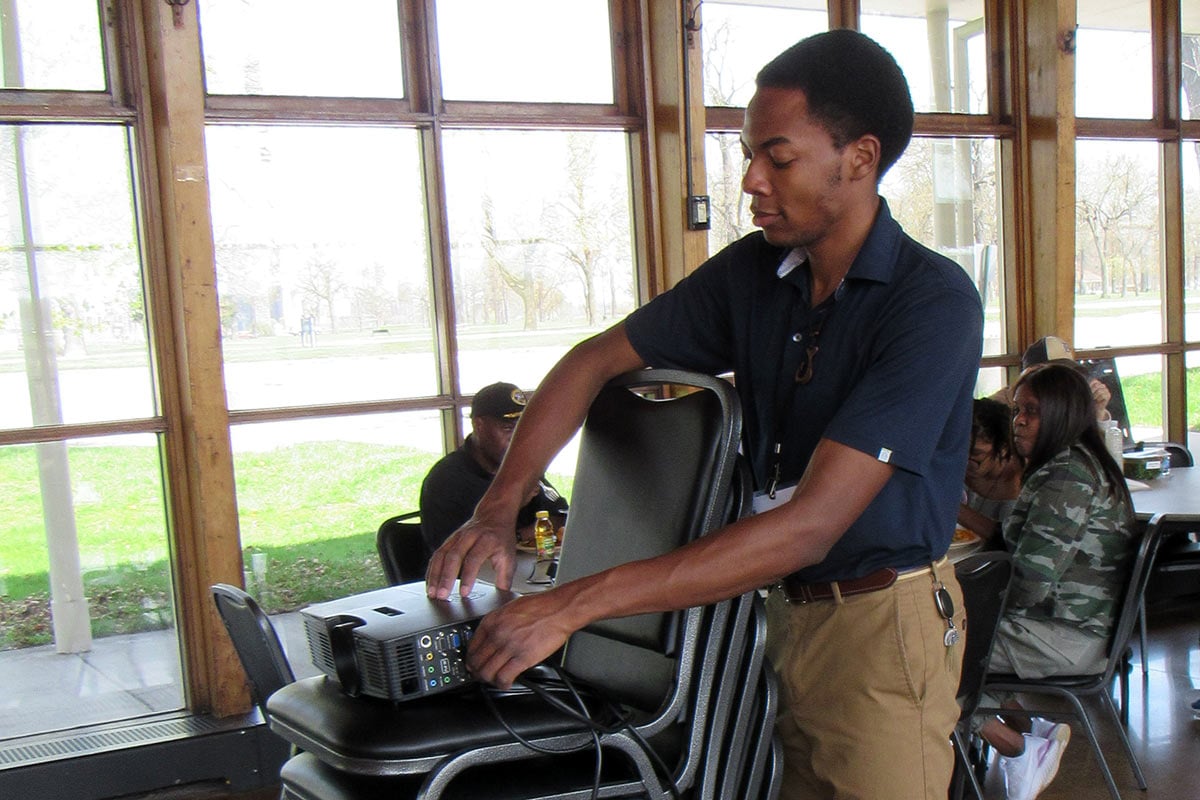
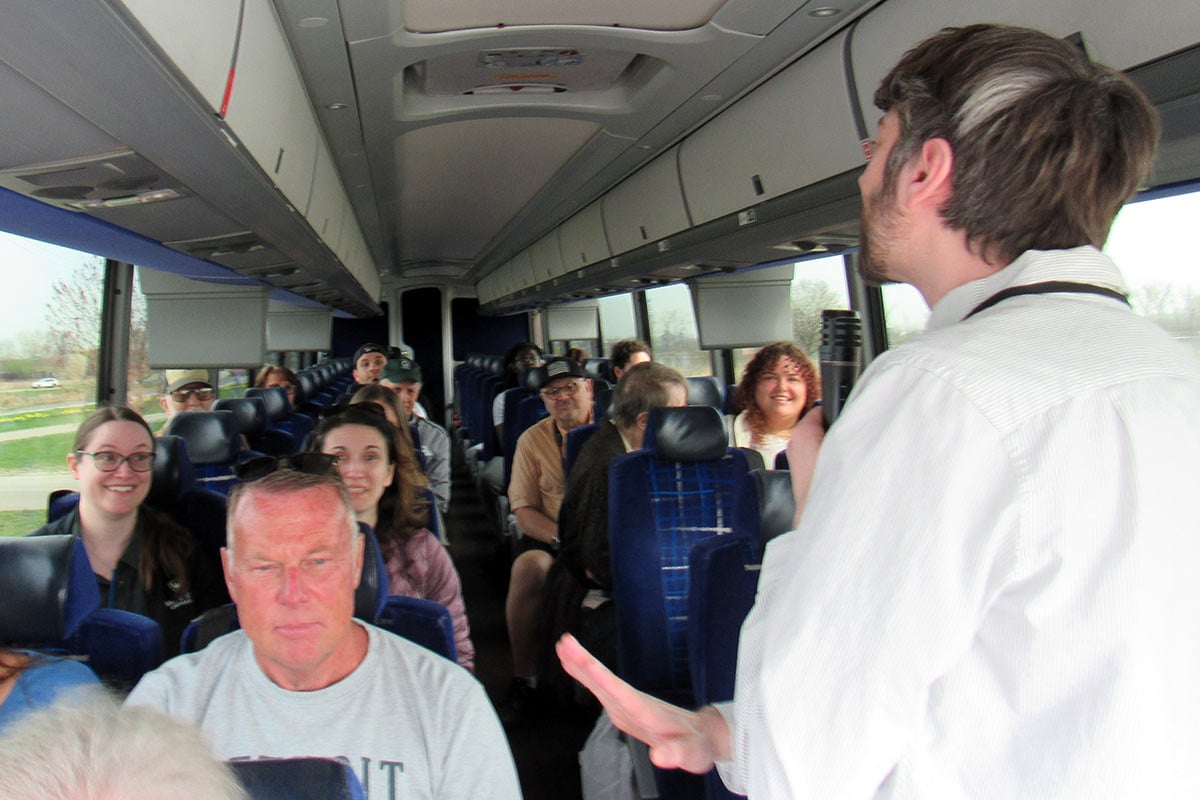
This event entailed a five-hour long tour of Belle Isle Park, a public park of the City of Detroit which has been managed under a cooperative arrangement with the Michigan Department of Natural Resources as a state park since Detroit’s bankruptcy in 2014. The event included a guided coach bus tour with multiple stops as well as a catered lunch. On-bus commentary was provided by Ossie White from the Belle Isle Conservancy and Professor Patrick Cooper-McCann from Wayne State University, and site exploration was facilitated by four docents who were selected for their personal insights into specific stops on the tour.
This event was designed for participation by residents of neighborhoods adjacent to the park, and was promoted primarily in collaboration with the Church of the Messiah, which provides not only traditional religious services to parishioners, but also numerous social services and cultural programs to the broader community.
Photos by Victoria Stewart