






|
|
|

|
|
|
|
Topic Framing Questions
| • |
What challenges did the newly freed African Americans face immediately after the Civil War? |
| • |
What did freedom mean to the newly freed? |
| • |
What resources did recently emancipated African Americans possess as they assumed life as free men and women?
|
| • |
How did African Americans define and exercise power in their first years of freedom?
|
|
|
|
|
|

|
|
|
|
Topic Framing Questions
| • |
How did African Americans create personal and group identity after emancipation? |
| • |
How did the challenge differ for those who were previously enslaved and those who were not? |
| • |
How is Christianity central to African Americans' search for identity in this period? |
| • |
How does a culturally disenfranchised group create a "usable past" that guards truth yet nourishes the future?
|
|
|
|
|
|

|
|
|
|
Topic Framing Questions
| • |
What roles did institutions play in African American life at this time? |
| • |
In what ways did institutions shape and reflect African American identity?
|
|
|
|
|
|

|
|
|
|
Topic Framing Questions
| • |
What forms of political action did African Americans initiate? For what goals? |
| • |
How was political action affected by the increase in discrimination and violence during the 1890s? |
| • |
How did black leaders frame their political objectives for their white audience? |
| • |
To what extent did black political action affect the lives of ordinary African Americans? |
|
|
|
|
|

|
|
|
|
Topic Framing Questions
| • |
What gains and setbacks mark the period of 1907 to 1917 for black Americans? |
| • |
To what extent did African Americans set their own paths forward? |
| • |
How were the lives of ordinary black people affected by black and white leadership? |
| • |
What identity had African Americans created, as a group, between 1865 and 1917? |
| • |
What insights could black Americans take forward into the postwar years and the 1920s?
|
|
|
|
|
|
| "The Making of African American Identity: Volume II, 1865-1917" was made possible by a grant from the Rockefeller Foundation. |
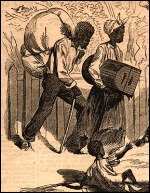
Images: "Escaped slaves arriving in Wilmington, N.C.," in Frank Leslie's Illustrated Newspaper, 29 April 1865, detail. Courtesy of the North Carolina Collection, University of North Carolina at Chapel Hill Libraries (Neg. 100-127. FP1-65-W74-C582w-A258). Reproduced with permission.
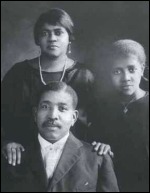
Minnie and Oscar Jackson and their daughters, Minnie (left) and Cecelia, ca. 1920, detail of M/M Jackson and Cecelia; photographer: Minnie McKee. Courtesy of the Carolina Room, The Public Library of Charlotte and Mecklenberg County. Reproduced with permission. |
|
|